Twisted pair cable: main characteristics and application
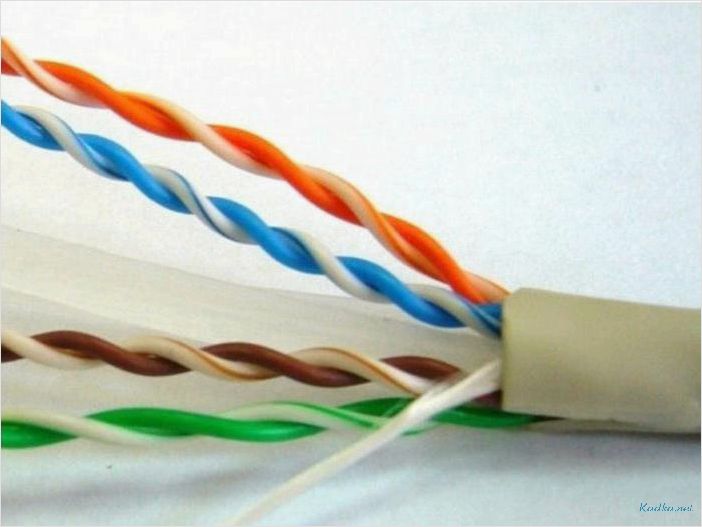
Twisted pair cable is a type of cable consisting of two or more conductors that are twisted together in pairs. It is widely used to transmit data, signals and power in communication networks, computer networks, telephone networks and other information transmission systems.
Contents of the article:
The main advantages of twisted pair cable are its low cost, ease of installation and the ability to transmit data over long distances. Twisted pair cables can be shielded or unshielded. Shielded cables provide protection against electromagnetic interference, which is especially important in high-density electronic equipment environments.
Twisted pair cables have different categories that determine their performance and data transfer capabilities. Category 5, Category 6 and Category 7 are the most common. Category 5 provides data transfer speeds of up to 100 Mbps, Category 6 – up to 1 Gbps, and Category 7 – up to 10 Gbps.
Twisted pair cable is one of the main types of cables used in modern communication networks. It provides reliable and efficient data transmission and is the basis for the operation of the Internet, computer networks and telephone systems.
What is twisted pair cable?
Twisted pair cable is a type of cable that is used to transmit data and signals in computer networks. It consists of several conductors that form pairs twisted together.
Twisted pair cable widely used in Ethernet networks to connect computers, routers, switches and other network devices. It is also used to transmit telephone signals and video signals in CCTV systems.

The main advantage of twisted pair cable is its ability to reduce noise and interference. Twisting pairs of conductors reduces electromagnetic interference from external sources such as electrical wiring or other cables.
Twisted pair cable can be shielded or unshielded. The shielded cable has a protective layer that prevents interference from entering. Unshielded cable does not have the same protection, but can be more flexible and cheaper to use.
There are several types of twisted pair cable, including categories 5e, 6 and 7. Category 5e is the most common and supports speeds up to 1 Gbps. Category 6 supports speeds up to 10 Gbps, and Category 7 supports speeds up to 40 Gbps.
It is important to correctly lay and connect the twisted pair cable to ensure reliable and stable data transmission. Improper installation or damage to the cable may result in signal loss or reduced data transfer rates.
Advantages of twisted pair cable
AdvantageDescriptionReducing interferenceTwisting wire pairs reduces electromagnetic interferenceVersatilityCan be used to transmit data, telephone signals and video signalsFlexibilityCan be stacked and connected in various configurationsLow costTwisted pair cable is relatively cheap to use
In conclusion, twisted pair cable is an important element of computer networks that ensures reliable transmission of data and signals. It has a number of advantages including reduced interference, versatility, flexibility and low cost. Proper installation and connection of twisted pair cables are important factors for ensuring efficient network operation.
How does twisted pair cable work?
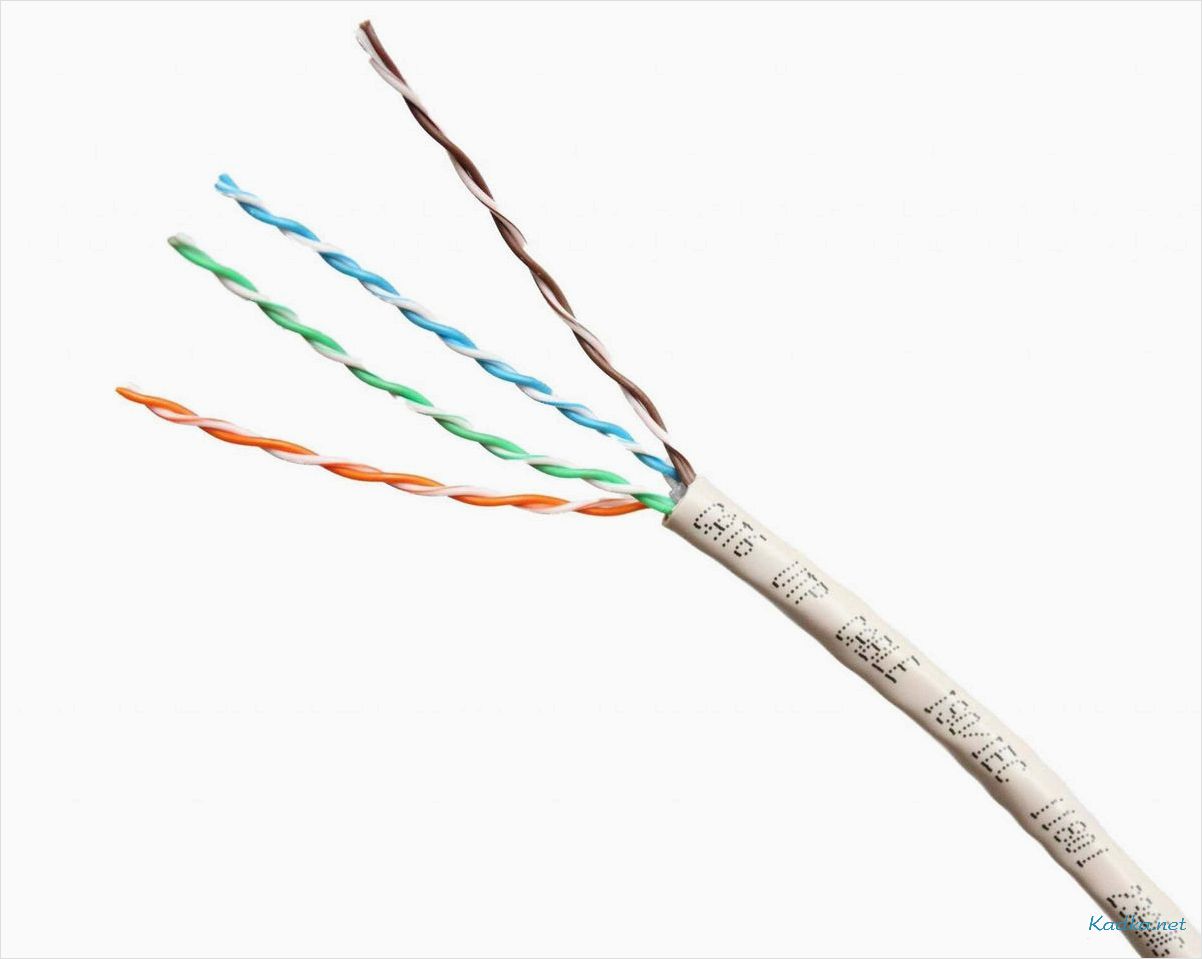
Twisted pair cable is one of the most common types of cables used for data transmission. It consists of several pairs of wires that are tangled together in a special order.
The basic operating principle of twisted pair cable is based on two phenomena: electromagnetic induction and shielding.
When a signal is transmitted through a twisted pair cable, electromagnetic induction occurs in each pair of wires. This means that a change in electrical current in one wire creates a magnetic field that affects an adjacent wire. Thus, the signal is transmitted from one wire to another.
However, to avoid interference and reduce signal loss, the wires in a twisted pair cable are tangled together. This creates a shielding effect that reduces the influence of external electromagnetic fields on the transmitted signal.
Twisted pair cable can be of different categories, depending on its characteristics. For example, category 5e is one of the most common and is suitable for data transmission at speeds up to 1 Gbit/s. Category 6 and 6a support higher data rates of up to 10 Gbps and 10/40 Gbps, respectively.
In conclusion, twisted pair cable is the main means of data transmission in computer networks. It provides reliable and stable signal transmission thanks to electromagnetic induction and shielding. The choice of twisted pair cable category depends on the required data transfer speed and the specific needs of the network.
Advantages of using twisted pair cable
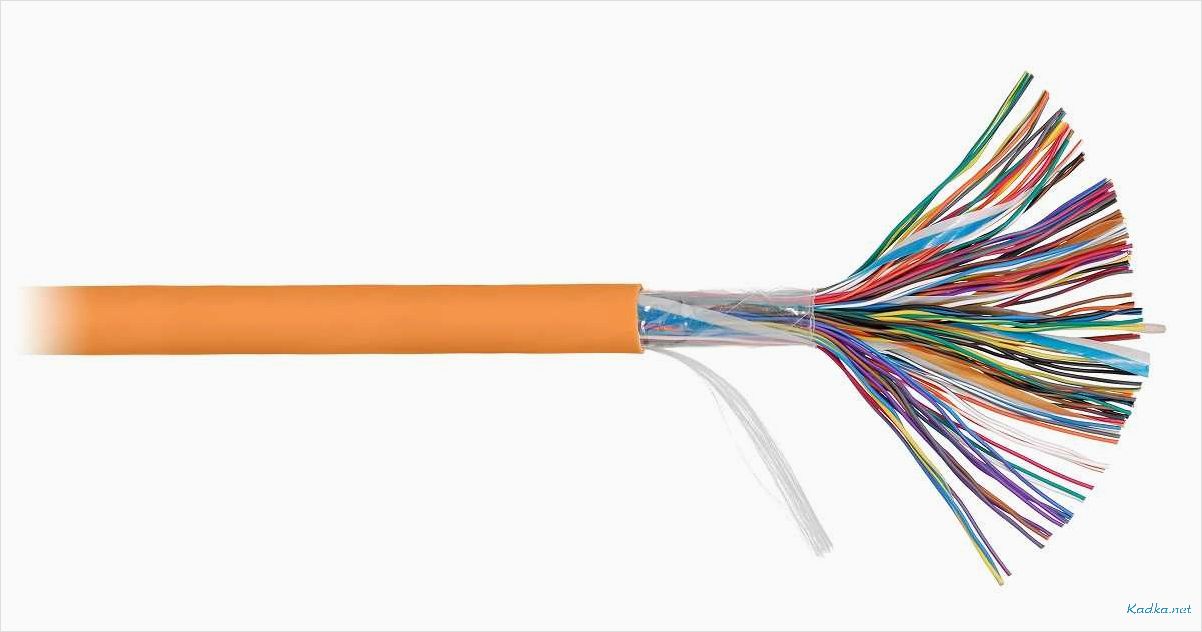
Twisted pair cable is one of the most common types of cables used for data transmission. It consists of several pairs of wires wrapped around each other in a spiral shape. Here are some benefits of using twisted pair cable:
- High data transfer speed: Twisted pair cable allows you to transfer data at very high speeds. This makes it ideal for use in networks with high bandwidth requirements.
- Resistance to interference: Twisted pair cable has good protection against electromagnetic interference, which allows it to transmit data without distortion and loss. This is especially important in environments with high electromagnetic noise, such as near electrical appliances or large electrical installations.
- Transmission range: Twisted pair cable allows you to transmit data over long distances without loss of signal quality. This makes it ideal for use in office buildings and other large spaces.
- Low cost: Twisted pair cable is one of the most affordable types of data cables. Its low cost makes it an attractive choice for many organizations and individuals.
Overall, twisted pair cable is a reliable and efficient solution for data transmission. It provides high transmission speed, resistance to interference, transmission range and availability at a low cost. These advantages make it a popular choice for many network infrastructures.
How to choose the right twisted pair cable?
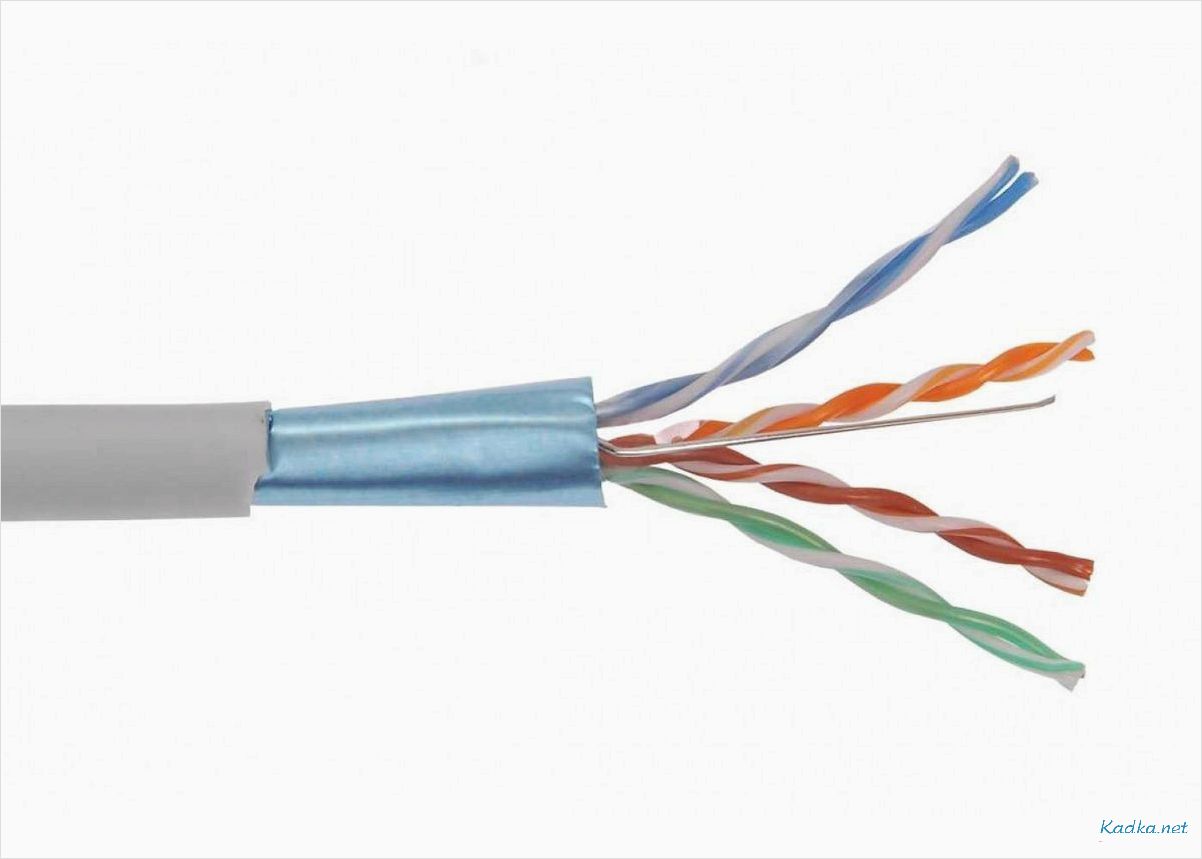
Twisted pair cable is one of the most common types of cables used to transmit data in computer networks. It consists of several pairs of conductors wrapped together in special insulation. Twisted pair cable can be used to transmit data over various distances, depending on its type and category.
There are several factors to consider when choosing the right twisted pair cable:
- Cable Category: Twisted pair cable has different categories such as Category 5e, Category 6, Category 6A, etc. The cable category determines its capacity and ability to support high data transfer rates. When choosing a cable, you should consider the requirements of your network and choose a category that meets those requirements.
- Cable length: The length of a twisted pair cable can vary from a few meters to several hundred meters. When choosing a cable, you should consider the length over which you want to transfer data and select a cable that is suitable for that length.
- Shielding: Twisted pair cable can be shielded or unshielded. Shielding helps protect transmitted data from electromagnetic interference, such as noise from other electrical devices. If your network is located in a room with a high level of noise, then you should choose a shielded cable.
It is also worth paying attention to the cable manufacturer and its quality. It is recommended to choose twisted pair cable from trusted manufacturers to be sure of its reliability and durability.
Comparison of different categories of twisted pair cable:
CategoryMaximum throughputMaximum lengthCategory 5e1000 Mbit/s100 metersCategory 610000 Mbit/s55 metersCategory 6A10000 Mbit/s100 meters
Ultimately, choosing the right twisted pair cable depends on your network requirements, the length of the data transfer, and the level of interference. By following the recommendations above, you can choose a cable that will ensure reliable and stable data transmission on your computer network.
Application of twisted pair cable in modern technologies
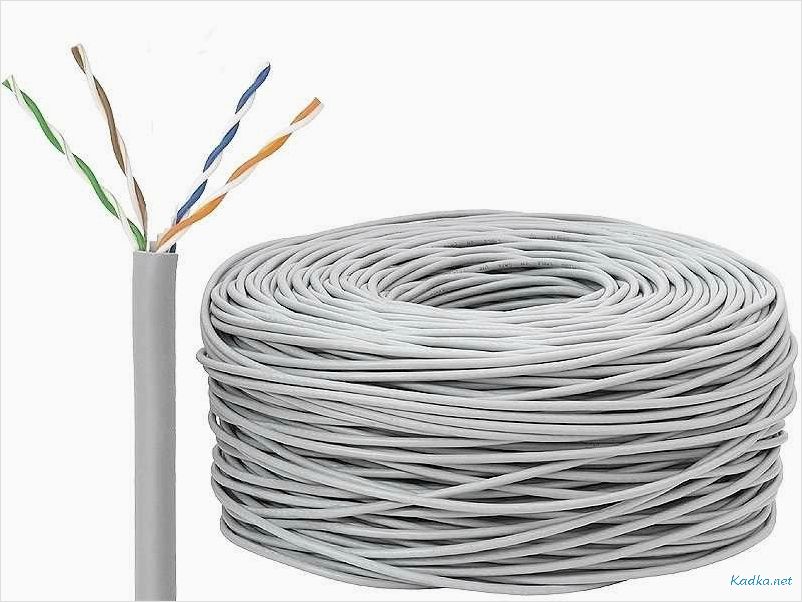
Twisted pair cable is one of the most common types of cables used in modern technology. It consists of several pairs of conductors wrapped around each other in a spiral shape. Each pair of conductors transmits data using a signal that can be analog or digital.
The use of twisted pair cable is widespread in data networks such as local area networks (LAN), wide area networks (WAN) and the Internet. Twisted pair cable is used to transfer data between computers, servers, routers and other network devices.
One of the main advantages of twisted pair cable is its ability to provide high data transfer rates. Twisted pair cable can transmit data at speeds of up to several gigabits per second, allowing for fast and efficient information transfer.
In addition, twisted pair cable has good protection against interference and electromagnetic influences. This is achieved thanks to a special method of twisting the conductors, which reduces the influence of external electromagnetic fields on the transmitted signal. This allows twisted pair cable to be used in environments with strong electromagnetic interference, such as near electrical appliances and electromagnetic fields.
Twisted pair cable is also low cost and easy to install. It is available in different types and categories, allowing you to choose the right cable for your specific needs. Installation of twisted pair cable does not require special skills and can be done even by a non-professional.
Twisted pair cable is used in many areas of modern technology, including information technology, telecommunications, medicine, industry, etc. It plays an important role in ensuring reliable and efficient data transmission, making it an integral part of modern communication systems.