Everything about bimetallic radiators: types, ratings, recommendations for selection
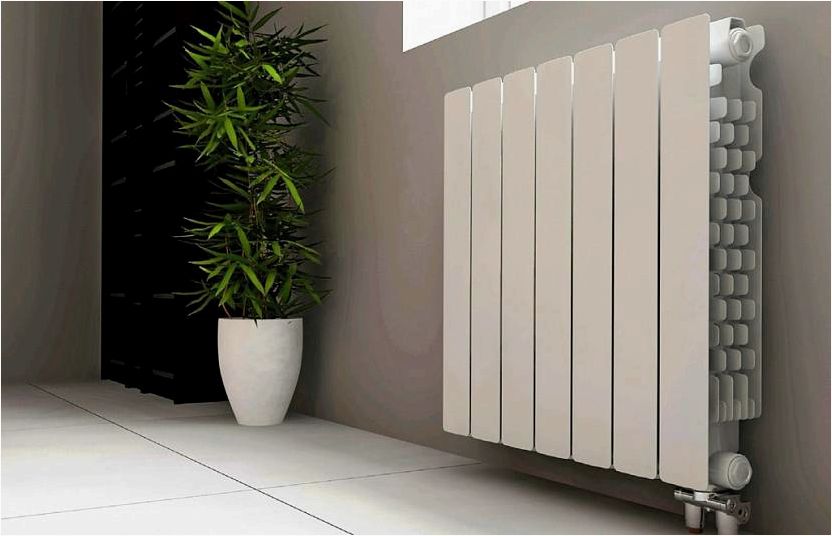
Bimetallic radiators are a new trend in residential heating. Such heaters are increasingly found in apartments and private houses. And this article will help you understand which bimetallic heating radiators are better and how they are superior to aluminum or semi-bimetallic devices. Before buy bimetallic radiators you should get acquainted with its characteristics. Below you will also find important tips for choosing a heating radiator.
Contents of the article:

Bimetallic or semi-bimetallic radiators
Bimetallic heaters are steel tubes connected by cold welding and coated with a layer of aluminum. This ensures that hot water does not interact with the outer shell of the radiator and helps prevent corrosion. In addition, aluminum is used in the form of shaped plates, which significantly increases the heat transfer area.
There are also copper cores for bimetallic radiators. They are suitable when the coolant is water containing antifreeze. Such compounds can quickly destroy steel, while copper is resistant to them.
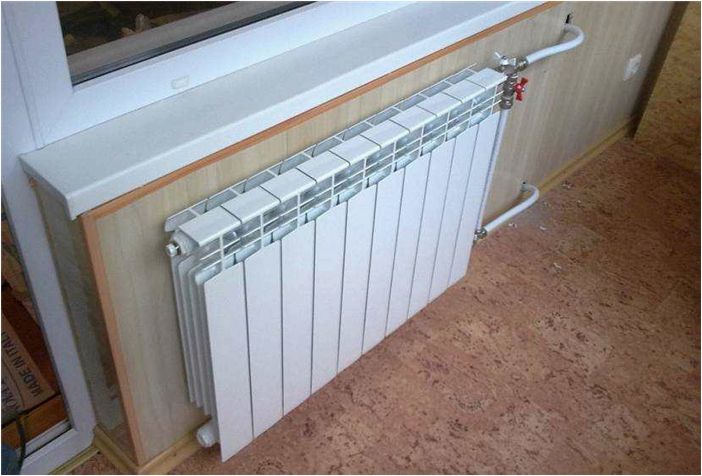
In semi-bimetallic radiators, the core is made of two metals. The vertical channel is made entirely of steel, and the horizontal channel is made of aluminum. The disadvantage of such devices is that they are not suitable for water with a high alkaline content. They inevitably require cleaning the coolant from impurities.
Now about which heating radiators are better. Bimetallic devices are more suitable for central heating systems, as they are more resistant to pressure drops and contaminated low-quality coolant.
Semi-metallic radiators are more efficient, but require ideal conditions for normal operation. They are more suitable for private homes and are much more expensive than bimetallic devices.
Bimetallic or aluminum radiators
A little about which radiator is better – aluminum or bimetallic. As for coolants, the advantage here is clearly on the side of the latter. Aluminum does not withstand prolonged contact with water, which contains a large amount of impurities.
Bimetallic radiators are also more resistant to high pressure than aluminum ones. After all, the core is made of alloy steel, which provides increased fracture and tensile strength.
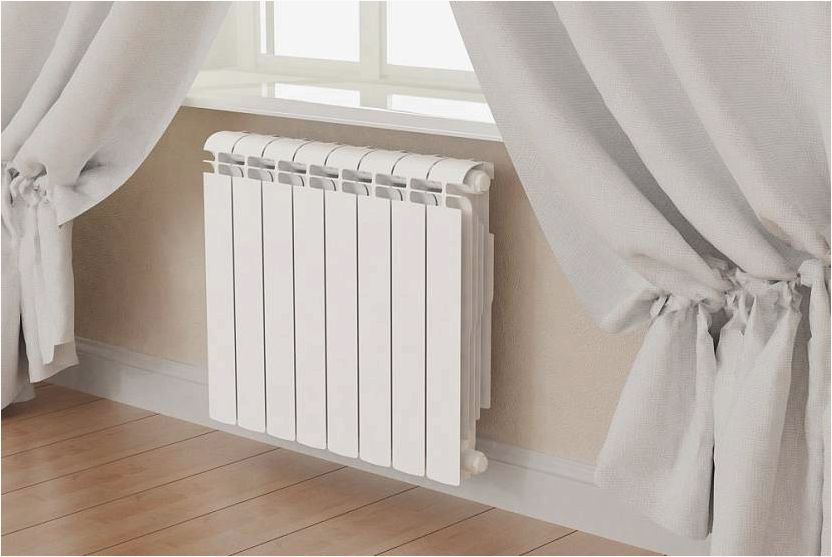
However, there are times when bimetallic heaters are inferior to aluminum ones. They are bulkier and heavier, cost much more, and the steel core reduces heat exchange with the room, reducing energy efficiency.
Undoubtedly, bimetallic heaters require increased heating costs. However, they are more durable and more suitable for urban heating networks. At the same time, aluminum radiators are ideal for private homes, where the owner can control the pressure and replace the water in the system.
Types of bimetallic radiators
There are two main types – sectional and monolithic. Below we will describe them in detail and help you decide which one is best for you.
Sectional radiators
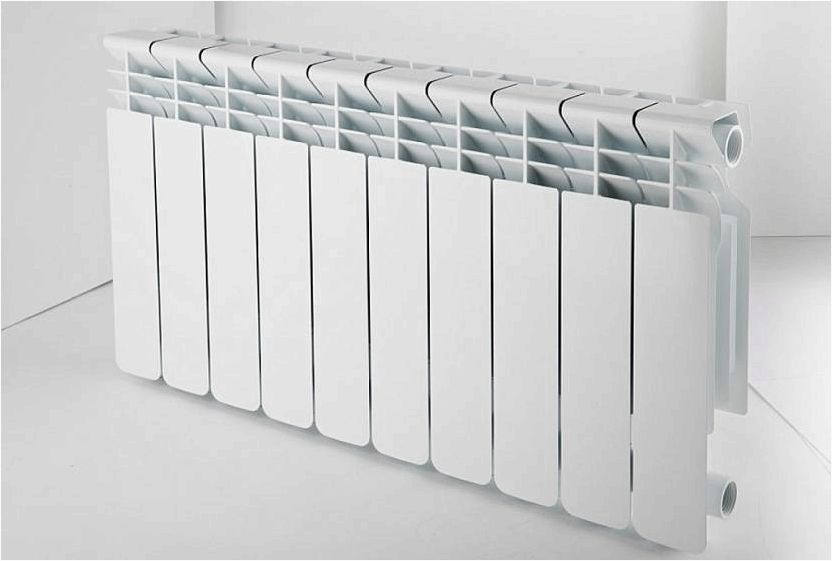
They are assembled from several sections. Often performed in the form of a “layer cake” made of heating plates. This conclusion significantly increases the area of heat exchange with the environment. However, there is also a significant drawback. Coolant destroys the connections of parts. This results in a relatively short service life.
Monolithic radiators
The large heat exchange area is also comparable to sectional heaters. They provide power per section of approximately 100-200 W. Monolithic radiators are manufactured using a fundamentally new technology. A cast is applied to the entire body, which is then applied under pressure. A layer of aluminum is applied under pressure to the steel frame.
The advantages of monolithic radiators are obvious. Their service life is twice as long – 50 years instead of 25 years, as in the sectional version. At the same time, they are about one fifth more expensive. Their disadvantage is the inability to adjust power by adding additional sections.
When considering the question of which heating battery is suitable for high-rise apartments, the answer is obvious – monolithic. The key point is that the pressure drop due to altitude is significant.
Rating of bimetallic heaters
The following information will help you understand which battery is best to choose for your home or apartment. Consider the operating conditions, workmanship and some nuances.
Global Style Plus 500
Suitable for central heating systems. Adapts well to high pressure and high acidity of coolants. The sections are connected by pipes with silicone gaskets that protect against leaks. The steel contours are crimped under high pressure and can therefore withstand strong water pressure. Another advantage of this model is the high quality of the livery.
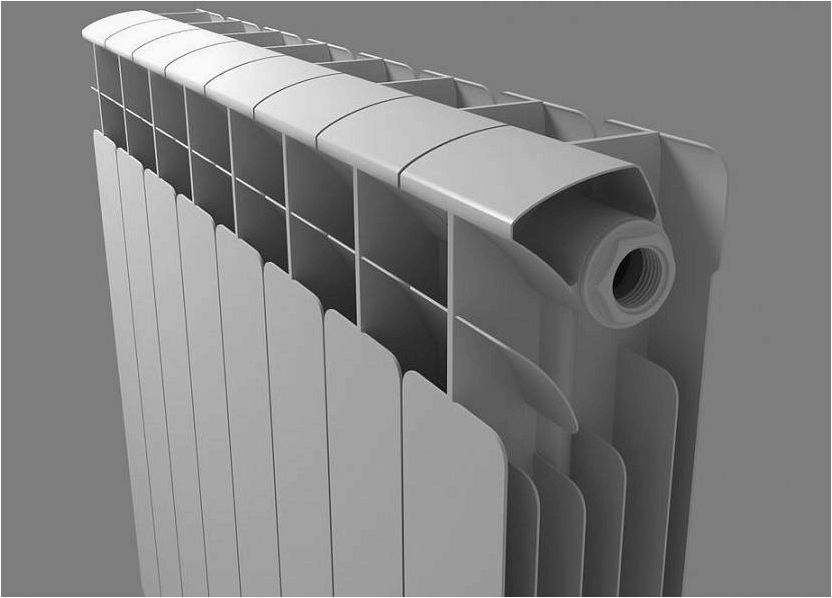
The only drawback is the significantly higher cost. On average, it costs 9, 500 rubles on the market. However, this model is considered decent.
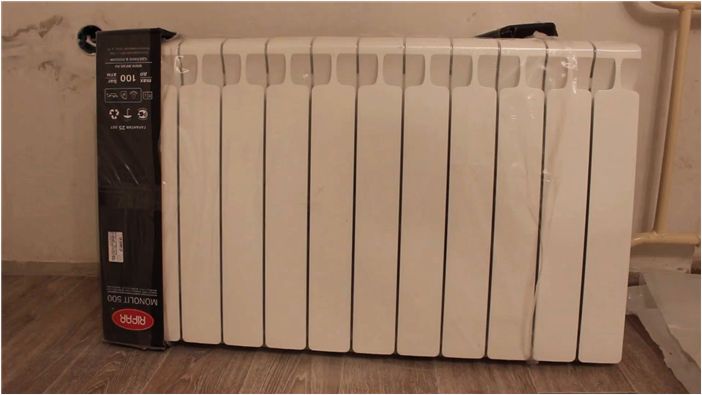
Rifar Monolit 500
Russian monolithic radiators, the popularity of which is rapidly growing. Made in the form of a single steel block, which eliminates the possibility of leakage. The radiator does not require a constant coolant temperature. Withstands pressure up to 100 bar in the internal circuit Rifar Monolit 500 ensures high heat transfer with minimal energy loss.
However, there is one caveat: the dimensions of the Rifar Monolit 500 heating radiator are fixed, like all monolithic devices. Therefore, simply adding or removing partitions will not work if it turns out that there are not enough of them or, conversely, too many.
Sira RS Bimetal
One of the quietest heating radiators. Can be installed in bedrooms; one block can contain up to 12 sections, the number of which can be adjusted depending on the area of the room. The inner casing is made of special steel, is resistant to corrosion and can be used in combination with low-quality coolants; The bimetallic Sira RS provides a high level of heat transfer and is designed for pressures up to 40 bar, making the radiator It is adapted to the water hammer inherent in central heating systems. However, this model has one drawback: it is not suitable for use with RS Bimetals. Despite this and the fairly high cost, many experts, when asked which bimetallic radiator is better, would answer Sira RS Bimetal.
Royal Thermo Revolution Bimetall 500
In fourth place in the ranking of bimetallic radiators is Royal Thermo-Revolution Bimetal 500, a very popular model from a domestic manufacturer. This device is adapted to fairly harsh operating conditions and provides excellent performance. The design has a wall section with an adjustable number of segments, the maximum number of which is 14. Royal Thermo Revolution Bimetallic 500 has side connections. The heater is designed for operating pressure up to 30 bar. The main factor that makes this model one of the most common in Russia is the price. Heaters can be purchased for an average of 4, 100 rubles. However, it is worth remembering that a sharp increase in coolant temperature can significantly reduce the efficiency of the device.
How to choose a bimetallic heater
When purchasing a device, it is important to consider several nuances. When going to the store, you must know exactly what power the radiator should provide, what dimensions it should have and to what conditions it should be adapted. Therefore, it is necessary to understand which bimetallic radiator is best for your home.
Calculation of the number of sections
Such calculations are based on the area of the room and the energy efficiency of a specific section of the device. For every 10 m2 of room, 1 kW of power is ideally needed. To calculate, you need to divide the total area of the room by 10 and divide the resulting result by the power of one section. The total cost should then be increased by 10%, rounded to the nearest whole number. This takes into account heat losses associated with external factors. As a result, the optimal number of radiator segments for a particular room is determined. Additional segments can be added if sectional heaters do not provide the required temperature level for certain functions in the room or home. This does not work with monolithic radiators.
Things to consider
To understand which heating radiator is better in a particular case, you need to pay attention to several points.
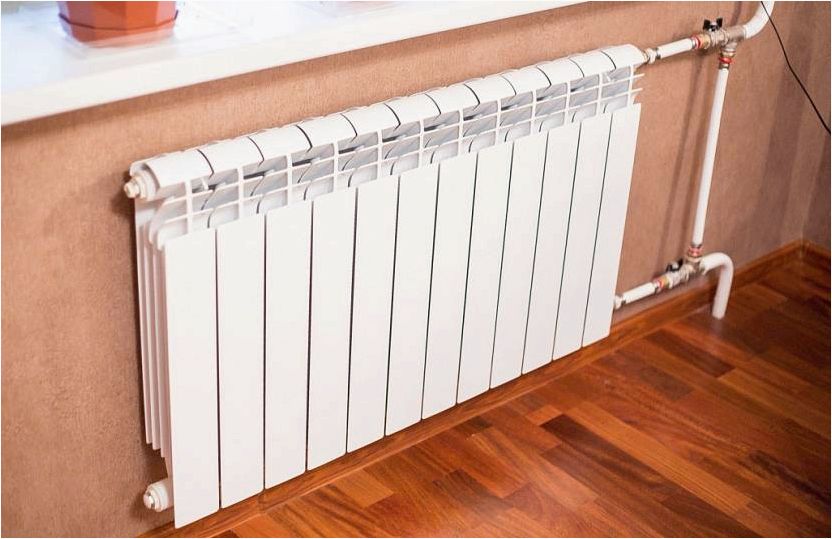
- In this case, the device has the highest energy efficiency and is therefore suitable for the largest heater sizes. However, it is important that the distance to the floor is at least 12 cm, and to the window sill – at least 10 cm.
- Power is one of the most important parameters. The larger it is, the better the radiator will heat up. Therefore, devices with small section volumes require high-quality coolant without impurities;
- Monolithic radiators are more suitable for apartments, as they can withstand sudden pressure surges, but at the same time, cheaper sectional models can be used for autonomous heating systems.
Briefly about the main thing
Bimetallic radiators are superior to semi-bimetallic models in durability and unpretentiousness, and are also more affordable. Bimetallic radiators are more durable than aluminum ones, but are more expensive and require more space. By design, bimetallic radiators are of two types: sectional and monolithic. The most popular models of bimetallic radiators are Global Style Plus 500, Rifar Monolit 500, Sira RS Bimetal and Royal Thermo Revolution Bimetall 500. To choose a suitable bimetallic radiator, you should also consider its power, dimensions and calculations. number of sections in a particular room.