A woman’s diet during pregnancy
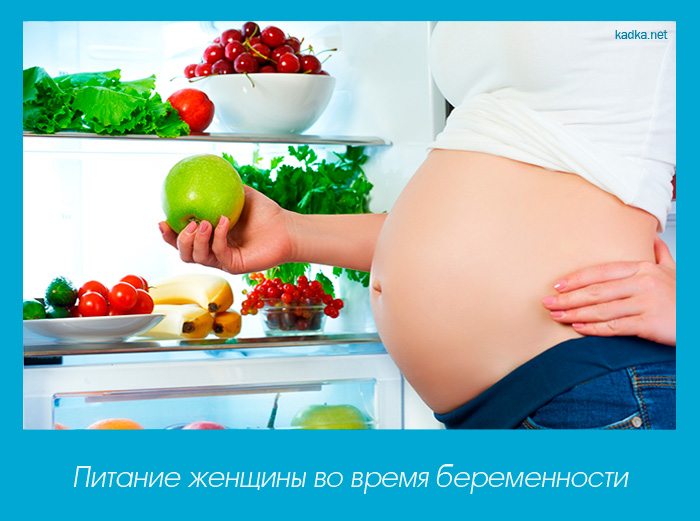
Throughout pregnancy, the baby receives nutrients directly from the mother. Therefore, the expectant mother should pay special attention to her diet. But what does right mean? Is it bigger or better?
Power quantity
There is an opinion that during pregnancy a woman is simply obliged to eat for two. And as a result, the expectant mother gains extra pounds, which can negatively affect the course of pregnancy. But now there is a lot of information about overeating during pregnancy and women limit themselves in food, which also does not have the best effect on the child. Therefore, the quantity of food is not an important factor, but the quality of the food consumed is of great importance.
Food quality
The human body requires energy to function. He can get it from food due to the calories he consumes. Some foods are low in calories, while others may have several times more. For a woman, the average daily minimum is 1800-2000 kcal, and when carrying a child, this figure increases and reaches 2500-2900 kcal.
What is important to eat during pregnancy?
1. The main component for fetal development is protein. You need to eat protein, both animal and plant protein.
2. It is better to use carbohydrates contained in vegetables and fruits, and wholemeal bread products. It is better to avoid carbohydrates contained in confectionery, baked goods, and pasta.

3. Fats. They must be used in food of both plant and animal origin. But various substitutes for these fats are not recommended for consumption.
4. Vitamins and minerals.
5. Water. The daily volume of fluid during pregnancy is about 2-2. 5 liters. Part of this volume is contained in consumed food and drinks, so 1. 2 liters in its pure form is enough.
The expectant mother’s need for vitamins and minerals is very high, so the doctor leading the pregnancy may recommend taking multivitamins in preparations in order to avoid their shortage.
Products that may be dangerous.
1. Seafood. Avoid raw fish and sushi; when cooking, increase the processing time.
2. Meat. It is recommended to eat meat in its pure form with good heat treatment and avoid sausages.
3. Dairy products. Use only pasteurized products.
4. Caffeine and herbal teas.
5. Alcohol.
What can poor nutrition lead to?
- Late “toxicosis”, which appears in the second half of pregnancy. This is a condition where fluid is retained in the body, which causes swelling, the level of protein in the urine also decreases and blood pressure increases;
- Possibility of miscarriage or premature birth due to improper development of the placenta;
- Increased risk of placental abruption, which can lead to death in both mother and child;
- Anemia;
- Fetal growth retardation;
- Low weight of the child.
Expectant mothers simply need to be attentive to their diet, because this is the key to a favorable pregnancy, easy birth and postpartum recovery.