Facial at a salon
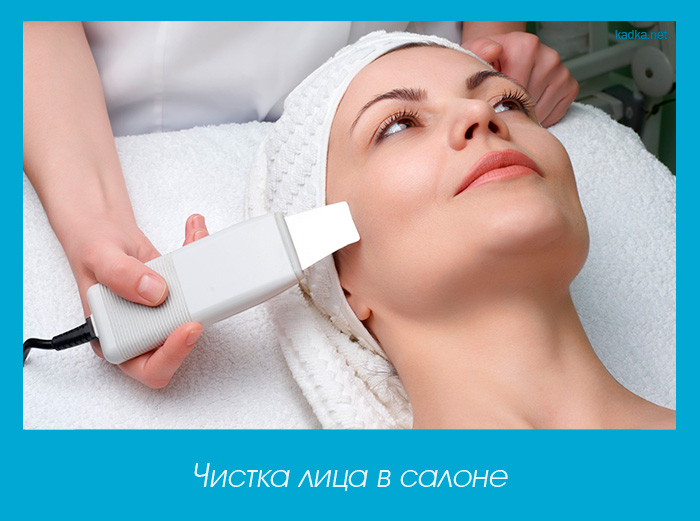
Sometimes, just cleansing your skin—or even exfoliating—isn’t enough to keep your face glowing and fresh. If you can’t resist squeezing a couple of pimples, then a facial at a salon is the perfect treatment for you. Is it really necessary to have it done at a salon, or wouldn’t it be easier to just quickly squeeze everything out yourself and be done with it? If you don’t want to end up with even more blackheads or pimples—or scars and marks left behind after removing them—it’s best not to take the risk.
Cosmetology Clinic spik has everything needed for a facial, from sterile conditions to the necessary and varied products. Not to mention specialized medical equipment. You won’t have these conditions at home. So, if you need to undergo this procedure, you should know that there are several types, and you’ll need to choose the one that’s right for you.
Mechanical facial cleansing
A cosmetologist will advise you on the type of cleansing your skin needs. The first step is usually a thorough cleansing of the face. Some practitioners do not trust cleansing with lotion; they prefer to use foams and gels that are rinsed off with warm water. In any case, after cleansing, the face is wiped down with an antibacterial solution. This is followed by steaming with hot steam, or vaporization. This warms up the skin, opening the pores as wide as possible, allowing blackheads to easily leave their hiding places.
In some salons, the skin is warmed using a special gel that opens the pores more slowly and gently. The gel can even be used on skin with closely located blood vessels, when exposure to hot steam is not recommended. Removal is performed manually, possibly using a tool such as a metal loop that grasps the sebaceous plugs lodged deep within the pores.
The aesthetician looks through a magnifying lens with a light, which allows them to see the tiniest pores that you wouldn’t even notice in a mirror at home. The process is slightly painful, but not unbearable. The aesthetician knows when to stop, as the pores begin to close as the skin cools. At that point, continuing the cleansing is strictly prohibited.
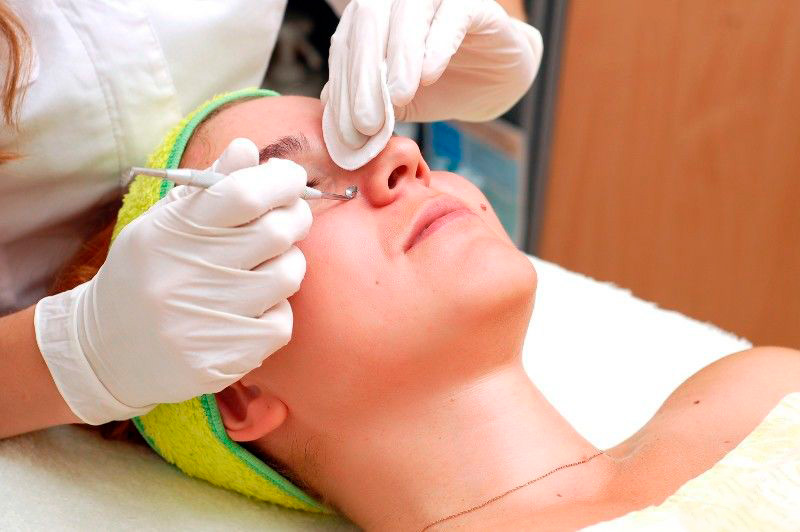 in cases of severe acne breakouts, not all lesions are removed at once, as this could trigger inflammation. The cleansing process may take two or even three visits. The procedure concludes with darsonvalization—treatment with high-frequency pulsed currents to promote rapid healing of sores and pustules, improve blood circulation, enhance oxygen supply to tissues, and increase skin firmness and elasticity.

A facial at the salon concludes with the mandatory application of a drying, soothing, and anti-inflammatory mask, which is selected based on your skin type.
Vacuum Facial Cleansing
A cosmetologist may also offer vacuum cleansing, which is performed using a device with an attachment that creates negative pressure inside. The contents of the pores are sucked in, much like a vacuum cleaner. Pain during this method is minimized, and the skin is not damaged at all. Notably, this method not only removes blackheads and pimples but also significantly accelerates lymphatic drainage, normalizes blood circulation, tones the skin, and improves its elasticity.
Vacuum therapy is recommended not only for patients with excessively oily skin, but also for those showing signs of sagging and aging. A contraindication is the presence of fragile blood vessels located close to the skin’s surface. In such cases, the procedure may even cause bruising. It should also be avoided in cases of active acne and certain inflammatory skin conditions.
The preparation steps are the same as for mechanical cleansing, including cleansing and steaming. The procedure concludes with either a mask or infrared radiation, which also soothes the skin and tightens pores.
After vacuum cleansing, as with any other treatment, you should not apply makeup to your face or use a heavy cream. Moving forward, be sure to cleanse, moisturize, and nourish your face regularly, choosing products from the cosmetic line that best suits your age and skin type. You can learn more about this procedure on the website http://www.spik.ru/ of the SPIK Cosmetology Clinic.
Ultrasonic facial cleansing
Ultrasonic cleansing is completely safe and does not damage the skin. Only the epithelium—dry, dead skin cells—is removed, along with small sebaceous plugs that are expelled from the pores. This treatment reduces skin oiliness and accelerates tissue renewal. Thanks to a unique ultrasonic massage that boosts the skin’s production of collagen and elastin, the face looks younger and its contours become more defined. Even expression lines are reduced, making this procedure highly sought after.
Unlike mechanical cleansing, ultrasonic cleansing does not stretch the skin at all and does not apply pressure to specific areas. The face must also be pre-cleansed and steamed using a vaporizer or a warming gel. The skin must be kept constantly moisturized during the procedure, so the device is designed to spray a specially prepared liquid onto the skin’s surface as the ultrasonic probe moves across it. At the end, a Darsonval treatment is applied, a mask is applied, or an infrared lamp is turned on.
However, this method will not produce the desired results for severe acne or cystic acne. Rather, it is best used to prevent the formation of new problem areas, improve overall skin condition, and promote rejuvenation. Some individual blackheads and pimples can be removed through manual extraction, that is, by hand.
In any case, the choice of procedure is up to the doctor; the main thing is to find a top-notch specialist, since facial cleansing, although a cosmetic procedure, is equivalent to a minor surgical procedure. Therefore, for the sake of your own health, you should not perform it at home or in questionable clinics.