Handheld Wood Router: Features of Use
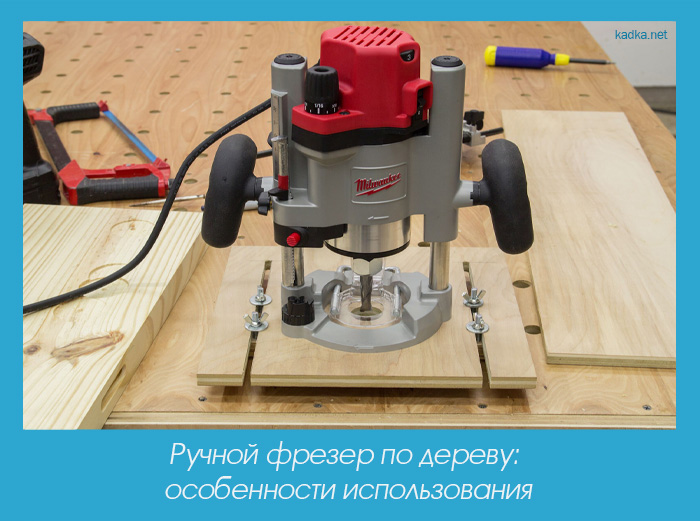
This unit is considered a universal tool for any craftsman. A handheld wood router is a power tool that should definitely be in any garage or workshop. What’s interesting is that this device can cut and drill literally anything: wood, plastic, metal, and even plexiglass. To ensure a handheld router effectively handles all tasks, it’s important to know how to choose the right one. To choose and buy a handheld wood router, you should familiarize yourself with the different types of this tool and the purposes for which each is used. Today, in our review, we’ll cover the features of this power tool, as well as the optional accessories that can be included with it.
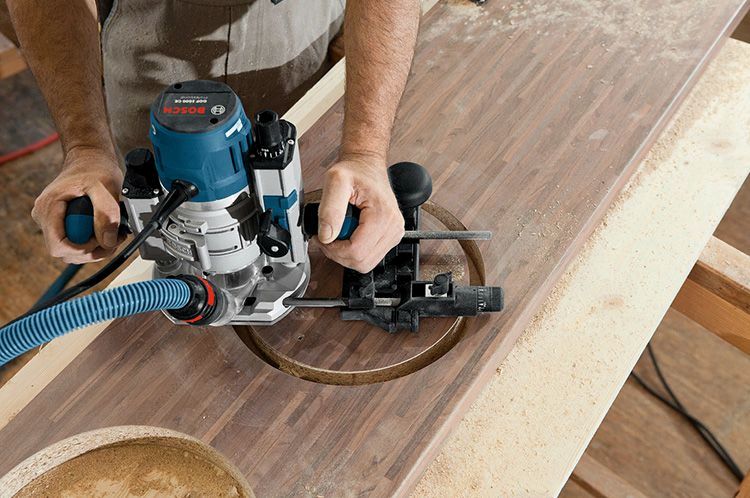
A router is a versatile tool for those who love woodworking. Scope of Application for Hand-Held Wood Routers
If you’ve decided to purchase a router, be sure to determine its intended purpose. Its cost and longevity depend on the correct set of functions. A hand-held wood router is a type of tool that, when properly equipped, can perform a wide range of operations:
Sanding and polishing of products.
- Edge processing – both straight and curved.
- Drilling mounting holes for dowels, door locks, and other hardware of various types.
- Drilling and boring curved and straight holes.
- Cutting tenons and creating grooves of various diameters and configurations.
- Rough alignment of workpieces, cutting, and sizing.
- Carving and engraving patterns (metal, wood, plastic, stone, and glass).
- Creating grooves on cylindrical workpieces.
- Creating slots and grooves. Milling machines of various types are among the most popular in the specialized electrical equipment market. We’ll discuss the additional capabilities of these machines a little later.
- Types of Hand-Held Milling Machines
Simple tasks with a hand-held router don’t require extensive experience. Milling a baseboard or batten takes literally a few seconds.

Hand-held milling machines are slightly different from their stationary counterparts; they are often used for simpler tasks: installing doors, windows, and gazebos, trimming excess layers, turning boards, turning strips, grooves, and threads of various types.
Milling machines come in three types:
Stationary.
Plunge.
- Edge.
- In the first case, the cutting tool cannot move relative to the device body. And to adjust the depth you have to perform some manipulations manually. This is not convenient enough, since the entire structure can be quite heavy.
- The stationary type machine includes an electric motor connected to a chuck in which the cutter is fixed.
A plunge router is much more convenient to use. In this case, the tool motor is mounted on special guides, which allows it to move along them along with the working attachment. In addition, the design of the machine makes it possible to lift it after completion of the work.
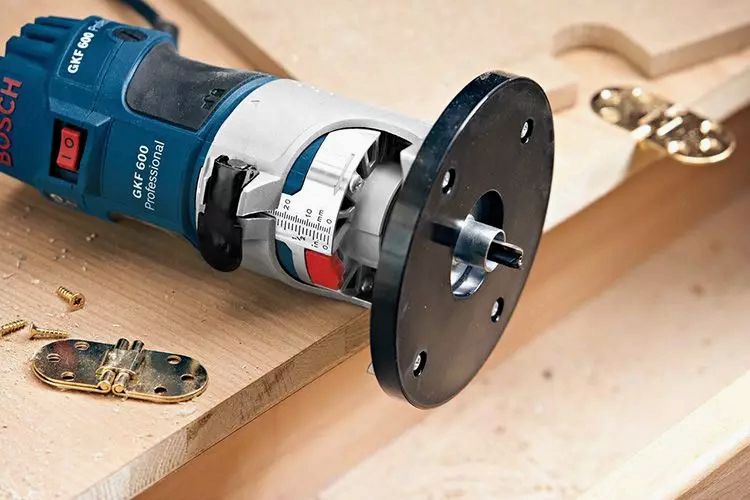
An edge milling cutter equipped with working attachments makes it possible to process the edges of products and chamfer them. In addition, using such a router you can process shaped door panels.
Technical parameters of manual wood router
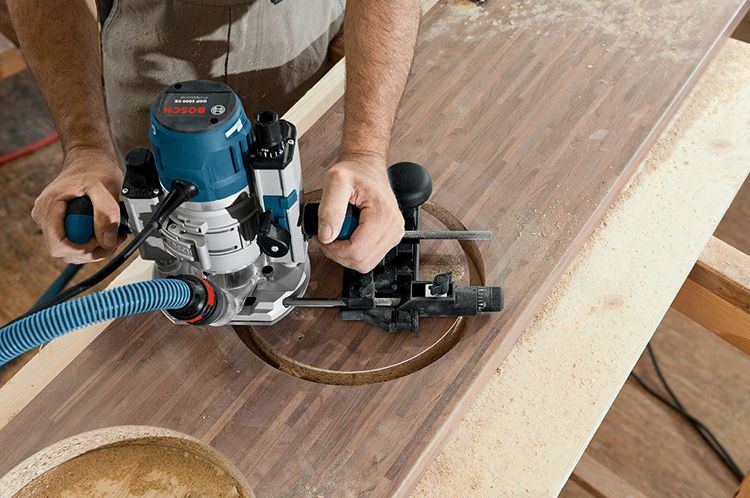
Studying the features and technical characteristics of the product will simplify the choice of the right model.
Spindle power and speed
If you are buying a machine for small volumes of work, you should not chase too high power.
Important! The higher the motor power, the more difficult it will be to perform precise machining of parts due to the high speed. If the rpm is too high, the risk of thermal damage to the workpiece increases.
In addition, a powerful engine will make the device very heavy. On the other hand, if a large amount of work is required, a more “strong” The model will last much longer and will not fail in a critical situation.
If it is not possible to select a powerful unit, you can increase the rotation speed of the tool.
Rotation speed is one of the main parameters of tool diversity. For hand tools, it can vary from 7–24 thousand rpm. This indicator affects the types of work that the tool can perform. For example, the higher the rotation speed, the easier it will be to make high-quality engraving or process glass. The lower the rpm, the less likely it is to make a deep cut.
Cutting stroke and additional options
The working stroke is, roughly speaking, the step of the cutter that it can go through in one go. In the most expensive models it rarely exceeds 6& minus; 7 cm. This function is almost rarely used. As a rule, recesses are made in several steps.
To make working with a manual wood router more accurate and convenient, additional devices are usually used.
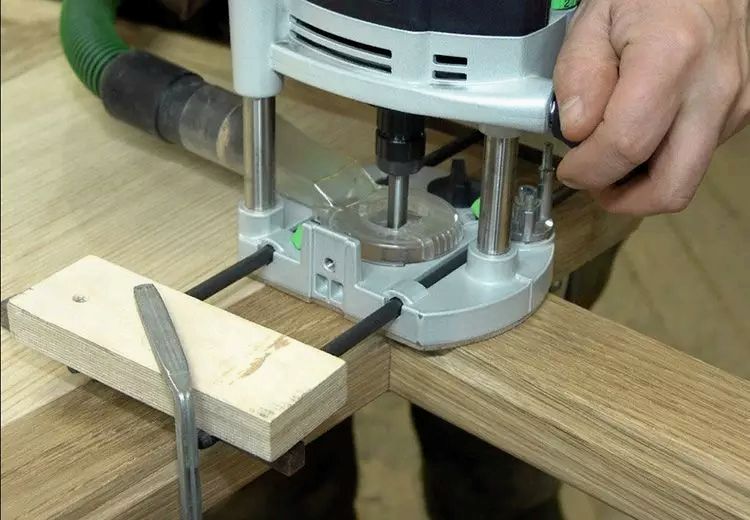
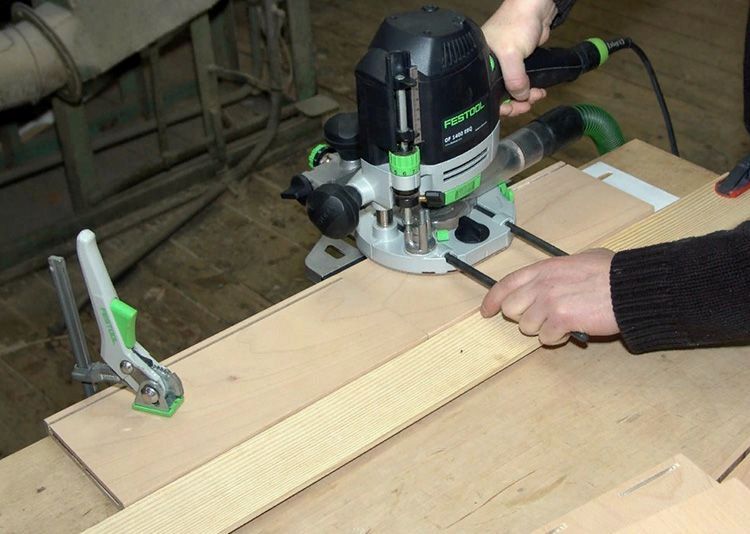
One such interesting device is the rip fence, which helps accurately mark the cut of the router bit relative to the edge of the workpiece.
Important! The cut that can be positioned can only be parallel to the edge of the workpiece.
Externally, this structure consists of two rods that are placed on the frame, and special feet allow the frame to be moved.
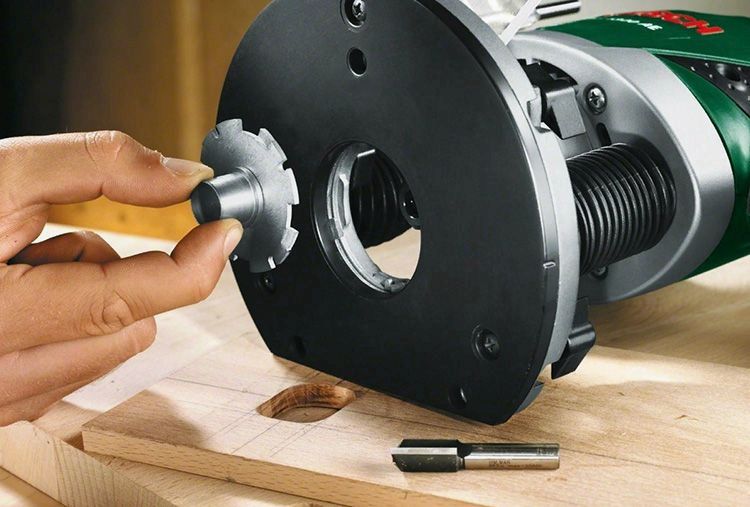
Another device, often equipped with both vertical routers and horizontal hand-held power tools, is the guide ring.
This metal plate with a flange determines the path of the router bit. The plate slides along the base surface, resting on the edge of the template.
Design Features of the Main Components of a Hand-Held Wood Router
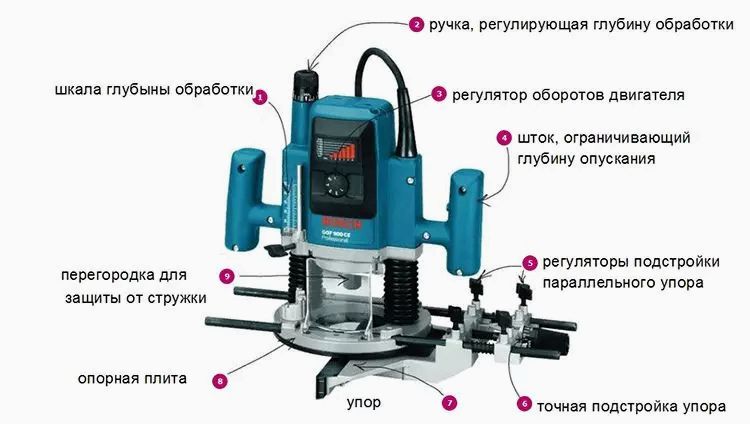
A hand-held router consists of a motorized engine hidden in a special housing. A miniature chuck, onto which the router bit is mounted, runs from the engine. The motor drives the bit. The device is equipped with special handles, and a guide plate serves as a stop. The entire design resembles an upside-down drill.
Design features of a hand-held wood router.
Which hand-held wood router to choose
A wood router, as experts believe, should be selected for specific tasks. Based on this, it’s necessary to consider power, weight, and additional attachments and accessories.
General advice is as follows:
Another important element of a router, the design and build quality of which should be considered, is the base. If the hand-held router you’re choosing includes additional attachments, check how securely they attach to the power tool’s working head.
Ergonomics. Stability and ease of use should be a top priority. Pay attention to the on/off button. The button should be as convenient as possible and ensure quick shutdown at any time.
The location and quality of the motor mounting and its protection. A conical mounting surface is considered the most convenient, as it matches the shape and dimensions of the electric motor shaft as closely as possible.
-
- Sole. This can be cast or stamped. The quality and ease of operation depend on how well the router sole adheres to the workpiece.
- Volume of the working area. If you plan to work with a tool in a narrow direction, without having accessories, then it is better to choose models that can provide maximum visibility of the processing area.
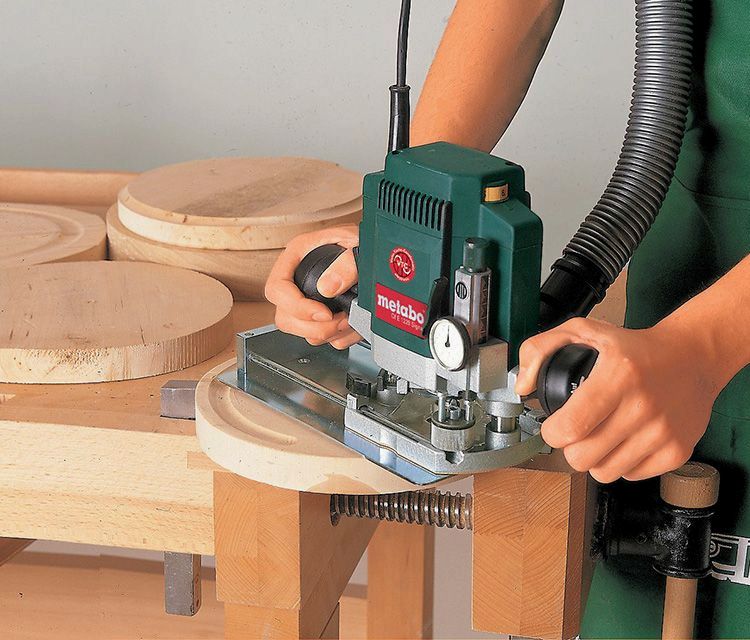
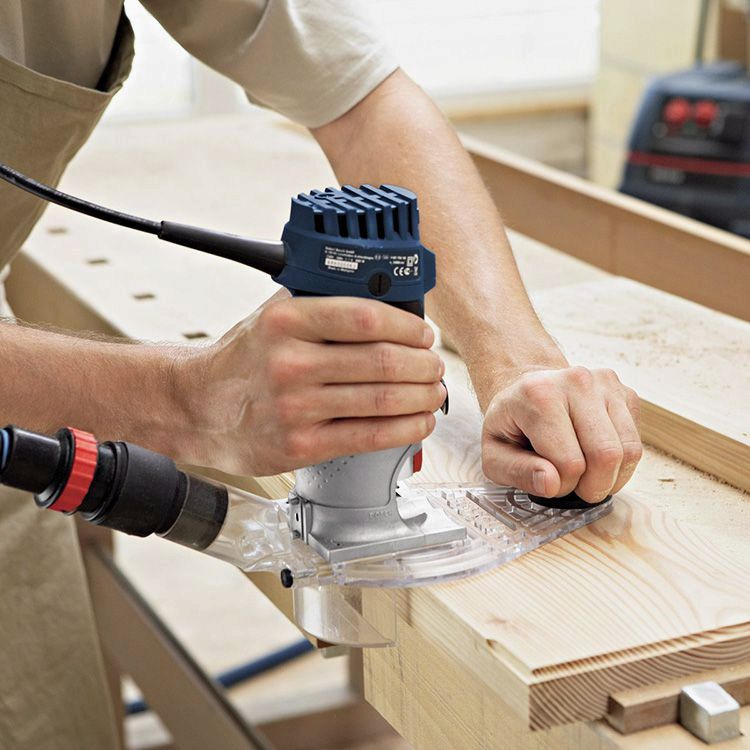
- Dust removal device and protective elements. The presence of protective elements ensures safe and fast operation. The most effective of these devices are airlocks for dust suction, built into the body of the router itself.
- manual, router, wood, features, use
- Manual wood router: features of use