Myocardial Infarction – Causes and First Aid
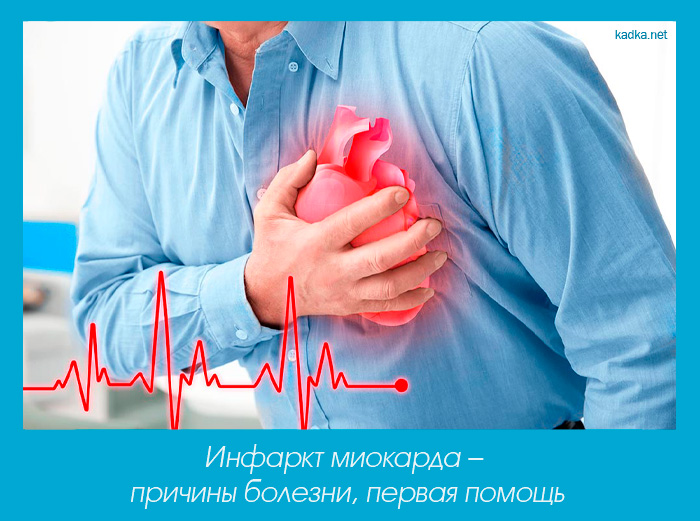
Myocardial infarction occurs, in most cases, in men aged 40–60. It is 1.5–2 times less common in women. As first aid before medical personnel arrive, you must first call an ambulance. Second, provide first aid: help the person sit or lie down comfortably, give them nitroglycerin (to be dissolved under the tongue), Lospirin (read the instructions for use by clicking the link), or Corvalol (dissolve 30–40 drops in warm water).
Smokers are at risk—smoking causes the coronary arteries to narrow, resulting in inadequate blood supply to the heart. Lack of physical activity and being overweight can also lead to a heart attack. Often, the condition manifests as the first sign of ischemia.
Fatalities among those who have suffered a heart attack occur in 10–12% of cases. Today, this is a very common reason for patients to be granted disability status.
Causes
The cells of the heart tissue receive nutrients and oxygen through a branched network of coronary arteries. During a heart attack, one of the vessels becomes blocked by a blood clot, which in 95% of cases forms where atherosclerotic plaques are present on the vessel walls; the oxygen supply to the heart tissue cells that were fed by this vessel lasts for 10 seconds. For about another half-hour after the event, this area of the heart remains viable; then an irreversible process of tissue change begins, and by 3–6 hours after the occlusion, the tissues of the affected area die. Depending on the size of this area, the heart attack is classified as small-focal or large-focal. If there is through necrosis of the myocardial wall, it is already a transmural heart attack.
The clinical picture of the disease is diverse, which complicates the establishment of an accurate diagnosis in a short time. The diagnosis is based on a combination of three manifestations of the pathology: typical pain syndrome, changes on the electrocardiogram, and changes in blood biochemical parameters indicating that heart tissue cells are damaged. If doubts remain, additional tests are performed; for example, a radioisotope method is used to identify areas of tissue necrosis.
Medical Management
The ambulance must transport the patient to the hospital quickly. Treatment will take place in the intensive care unit. Prescribed medications include pain relievers, blood thinners, blood pressure-lowering drugs, and medications to slow the heart rate.

Rehabilitation after treatment lasts about six months. The prescribed rehabilitation therapy is sometimes necessary for the patient for the rest of their life. If the doctor’s recommendations are followed, the vast majority of patients go on to live a full life for many years.