British and French Christmas tree – the history of parquet
French Christmas tree – this parquet design has a long history. It begins in France, where the first parquet floors in this style were created. Since then, parquet has differed from a simple plank floor in the presence of a laying pattern and the quality of finishing. Craftsmen always wanted to surprise nobles and emphasized the beauty of wood in their works.
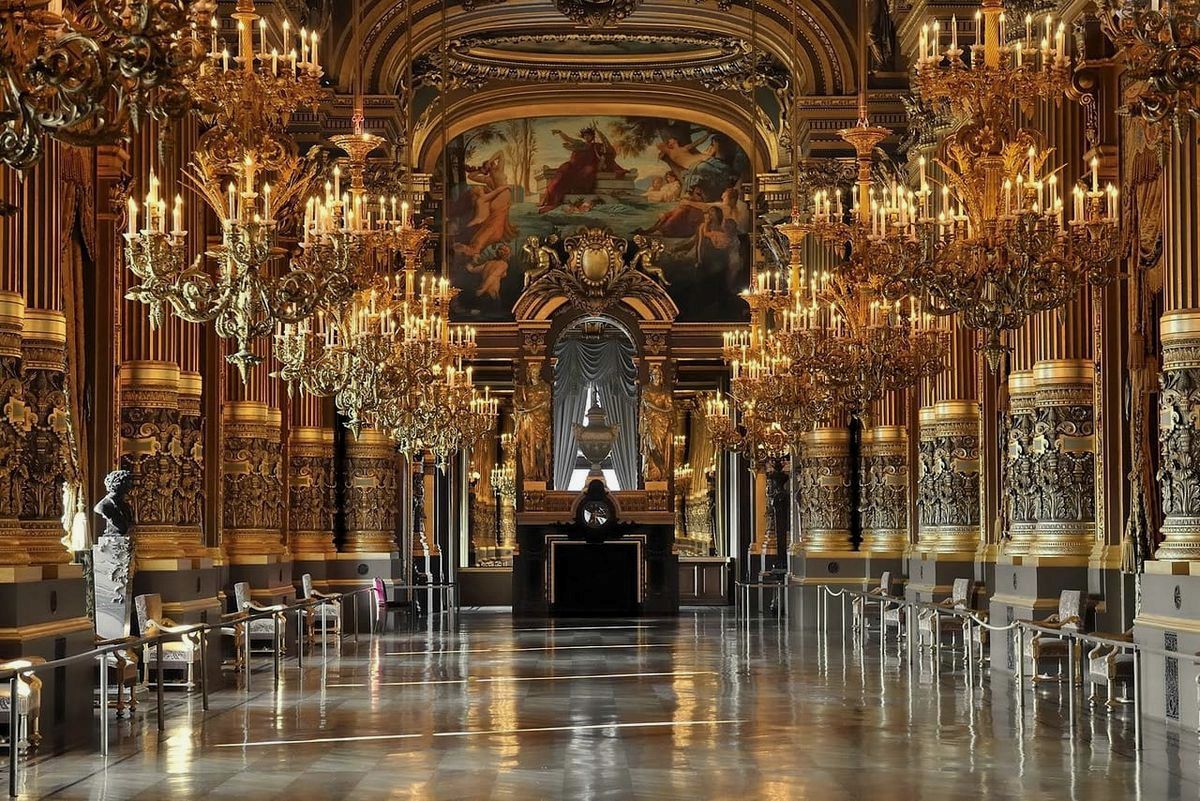
The ideal landscape design and luxurious palace and park ensemble in the suburbs of Paris are called the eighth wonder of the world. One of the earliest patterns for laying parquet is considered to be the traditional herringbone (British herringbone, Herringbone, batons romps) and the French herringbone (Chevron, Point de Hongrie), which originated in medieval Europe.
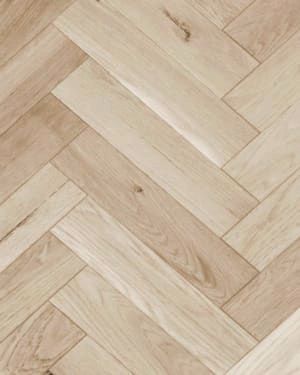
Batons Romps
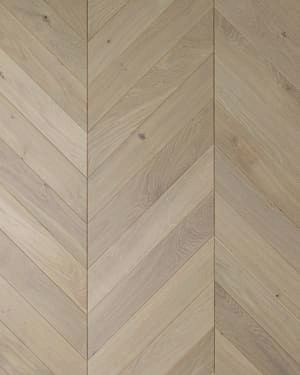
Point de Hongrie
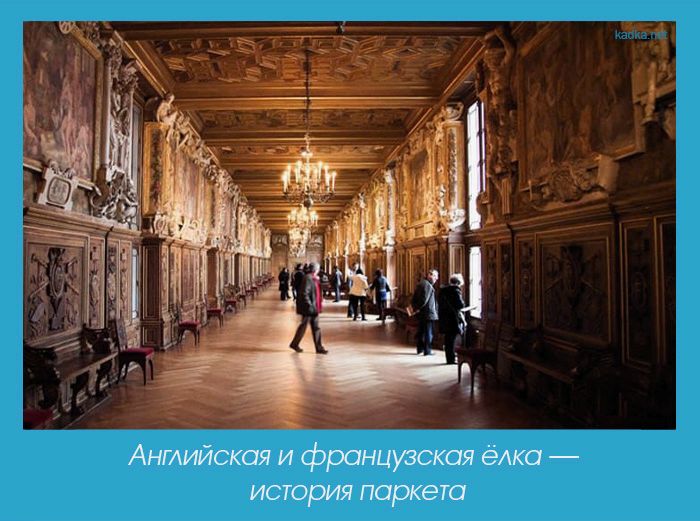
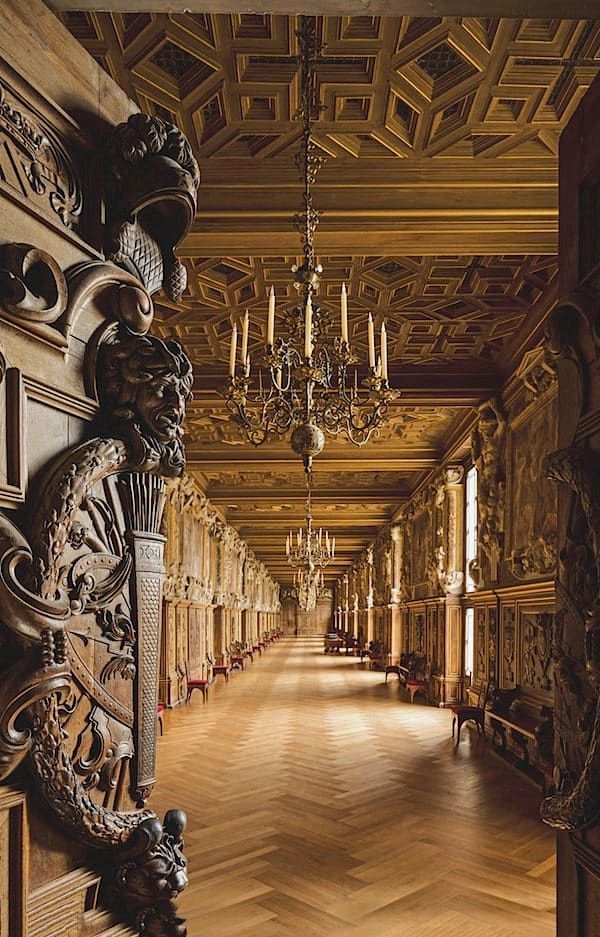
British Christmas tree – Fontainebleau Palace (Ch& acirc; teau de Fontainebleau)
The simplicity and expressiveness of these types of styling makes them attractive and stylish both in the old days and today, the popularity of this styling is growing.
The first to appear was the traditional herringbone laying – it consisted of rectangular boards laid in a zigzag and, apparently, this was a desire to imitate decorative brickwork. Brickwork was used everywhere, from decorating churches to the homes of nobles.
There is another hypothesis that the herringbone is similar to the decorative pattern that was obtained on the earthen floor if housewives sprinkled it with sand and swept it in a special way.
One of the earliest examples of parquet laying in a regular herringbone pattern that has come down to us is the gallery of Francis I in the Fontainebleau Palace (French: Ch& acirc; teau de Fontainebleau). The floor was installed in 1539, during the reign of Francis I, and was made by craftsmen whom Francis hired in Italy.

Chateau de Fontainebleau
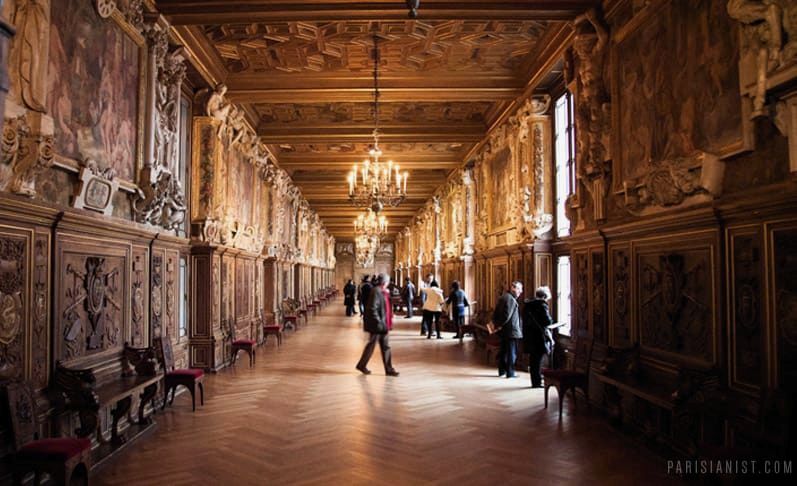
This is confirmed by written evidence from that era, which describes the laying technique as Italian. Unfortunately, no equally ancient Italian buildings have survived, although there are also more ancient Italian buildings with herringbone floors made of tiles or bricks.
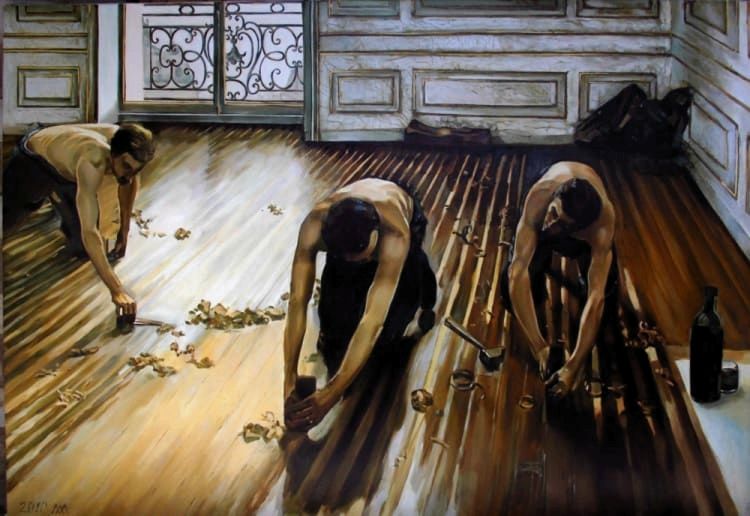
One of the amazing paintings of Gustav Caillebotte has survived to this day – Parquet People. This piece is in the watch collection.
The painting “The Parquet Floor Workers” is one of the first canvases depicting the everyday work of urban workers. It lacks any overt socio-political overtones and faithfully depicts the workers’ situations and their tools. The painting depicts three shirtless workers scraping old varnish from a wooden parquet floor. Two of the workers’ heads are slightly turned toward each other—likely conversing. A bottle of wine with one filled glass stands against the wall to the right. The lower part of a balcony door, behind which lies a wrought-iron balcony railing, is visible in the background.
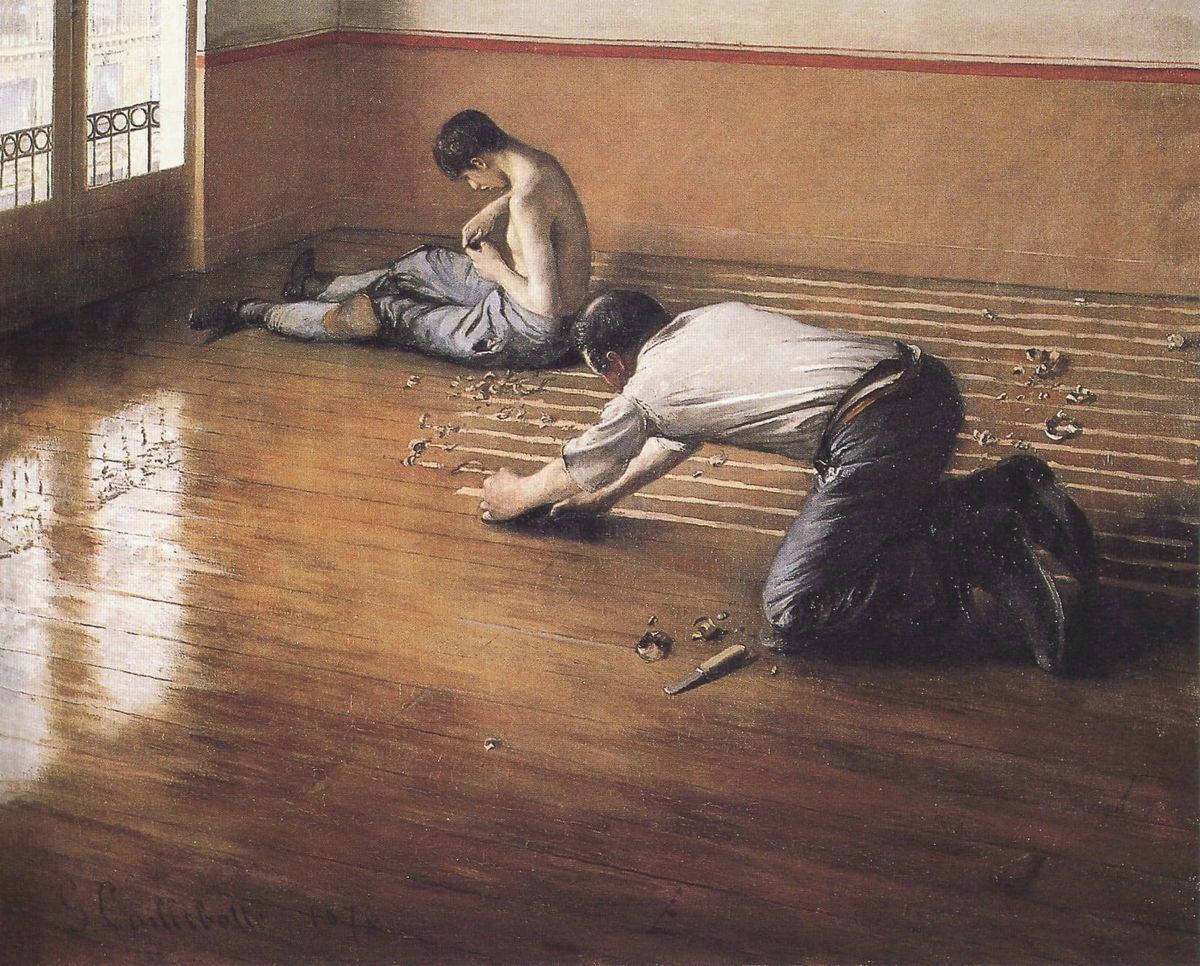
There is also another painting by Caillebotte with a similar title, painted in 1876 and depicting two parquet floor workers (most likely a foreman and his assistant). This painting is in a private collection, but is sometimes exhibited in museums.
Gustave Caillebotte. “The Parquet Floor Workers I.” 1875. Oil on canvas. 102 x 146 cm. Musée d’Orsay, Paris, France.
Gustave Caillebotte. “The Parquet Makers II.” 1876. Oil on canvas. Private collection.
Also well known is the Godolphin House in Cornwall, where the traditional herringbone parquet floor was laid around the mid-17th century.
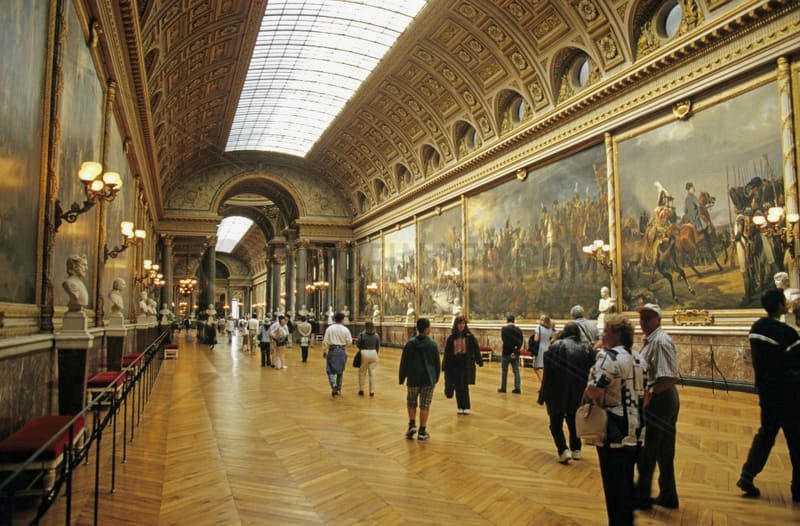
The French herringbone pattern can be considered, in a sense, a development of the traditional herringbone pattern. Making a beveled cut is more difficult technologically, especially in times when woodworking machines were not available. While more labor-intensive and requiring high geometric precision, the French herringbone parquet floor is more expressive, coherent, and elegant, and offers a wider range of installation options (ferns, diamonds, rays). The origin of the name “Chevron” is fairly clear and stems from the French “chevron,” meaning rafter or ridge on a V-shaped roof. However, the French themselves call this pattern “Point de Hongrie.” Foreign sources link it to the name of a similar embroidery pattern, which in turn was named after Princess Elizabeth of Hungary. Regardless, the name has firmly established itself in France The variety of designs of the French herringbone is also increased due to the different designs in the angle of opening of the zigzag, the cut on the bar can be from 30°; up to 60°, but 45° is the most common. The first examples of this style date back to the 16th century, and written references can be found since 1690, in the description of the Palace of Versailles made by the Swedish sculptor Nicodermus Tessin. It appears in the encyclopedia of Diderot and d’Alembert (1751), and in the book “The Art of Woodworking” André-Jacob Roubo (“L& rsquo; Art de la menuiserie” de Andr& eacute;-Jacob Roubo (1769)) is presented in the form of a conventional floor structure. The French herringbone was a harbinger of more complex geometric patterns of artistic parquet and is often found in old French castles, in the Paris Louvre, in royal palaces and medieval castles in the Loire River valley: Amboise, Villandry, Montsoreau, Saumur, Azay-le-Rideau, Langeais (Langeais), Chambord (Chambord), Chenonceau (Chenonceau), Blois (Blois), Brissac (Brissac) and others palace of Versailles – French herringbone (chevron)
English, French, Christmas tree, history, parquet
English and French Christmas tree – the history of parquet
English and French Christmas tree – the history of parquet