Quartz sand: origin, properties and industrial use
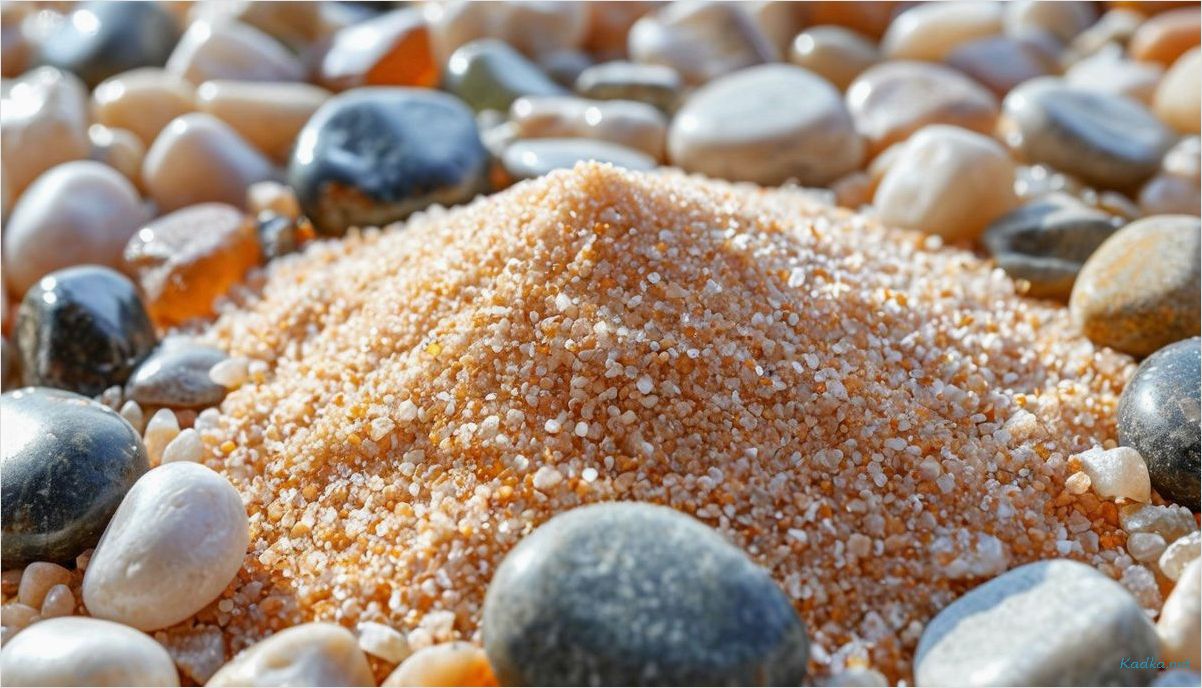
Quartz sand is the optimal material for creating durable concrete mixtures. Its high-hardness particles (7 on the Mohs scale) increase the wear resistance of coatings, which is critical for road surfaces and industrial floors. Adding 20-30% quartz sand to concrete reduces the risk of shrinkage and cracks even under extreme loads.
Contents of the article:

In the glass industry, grains measuring 0. 1-0. 6 mm with a silicon dioxide content of 99% ensure transparency and heat resistance of products. For example, to produce window glass, sand with a minimum amount of iron oxides is used – no more than 0. 025%.
Filtration water treatment systems require sand with a fraction of 0. 4-2 mm: this range retains up to 90% of suspended particles. Quartz sand retains its structure during prolonged contact with aggressive environments, which distinguishes it favorably from its limestone counterpart.
When choosing a material for sandblasting, pay attention to sand with angular grains – they create surface roughness of up to 70-100 microns. This is 3 times more effective than rounded particles of river sand. To protect equipment from abrasive wear, it is recommended to use sand with a particle size modulus of 1. 8-2. 5.
Availability of deposits and low production costs make quartz sand key raw material for 85% of building mixtures. Before purchasing, check the certificates for the content of clay impurities: their share should not exceed 1% for paints and varnishes and 0. 3% for casting molds.
Quartz sand: how to optimize costs in construction projects
Savings without loss of quality
Replace expensive abrasives with quartz sand when sandblasting metals: the 7 Mohs hardness material effectively removes rust, reducing costs by 30%. In landscape design, use colored quartz sand for decorative paths – the service life of the coating exceeds 10 years even under intense load. To produce paving slabs, mix sand with cement in a ratio of 1:3 – this reduces cost without compromising frost resistance.
When purchasing, check the documentation for quartz sand: the silicon dioxide content must be at least 95%, and the humidity must be up to 0. 5%. This guarantees the stability of the material’s properties under conditions of temperature changes fro m-50°C to +200°C.
How quartz sand improves the wear resistance of concrete pavements
Mechanism of strengthening concrete with quartz sand
Add quartz sand of a fraction of 0. 5–1. 2 mm to the concrete mixture in a proportion of 25–30% of the total mass of the aggregate. Quartz particles, with a hardness of 7 on the Mohs scale, create a dense frame that reduces surface abrasion by 40-50% compared to conventional concrete. This is especially true for floors in workshops, parking lots and paving slabs.
Practical recommendations for the durability of coatings
To evenly distribute quartz sand in the mixture, use vibration compaction when laying concrete. This prevents the components from separating and increases the homogeneity of the structure. Additionally, use dry quartz sand with a particle size modulus of 2. 0–2. 5 to iron the surface – this will increase the compressive strength of the top layer to 70 MPa.
Combine quartz sand with polymer additives (such as acrylic resins) to protect concrete from chemical attack. Such compositions reduce the risk of microcracks forming under load and extend the service life of coatings to 20–25 years.
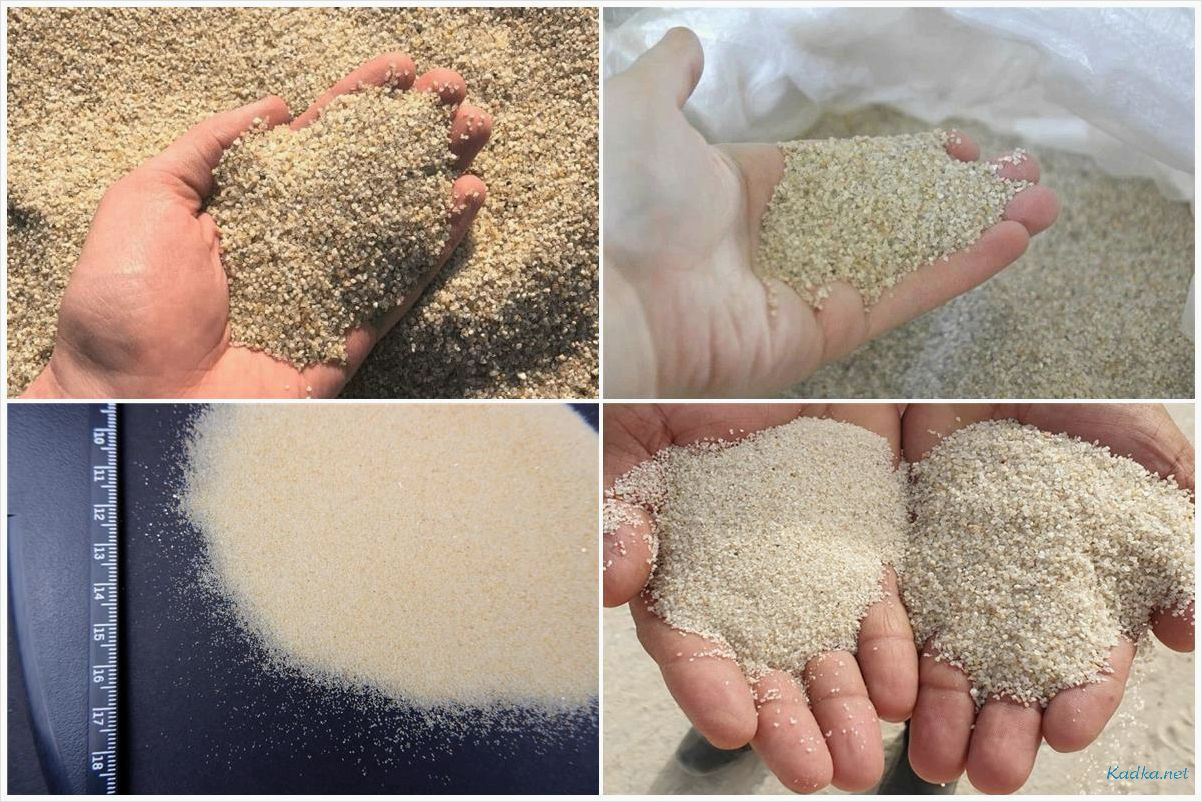
Quartz sand in glass production: criteria for selecting fraction and purity
Optimal particle size for melt
Choose sand with a fraction of 0. 1–0. 6 mm for the glass industry: too small particles (less than 0. 1 mm) increase energy consumption for melting, and large ones (over 0. 6 mm) slow down the homogenization process. For example, for window glass, a fraction of 0. 3–0. 5 mm is ideal, ensuring uniform distribution of the charge components.
The role of chemical purity in glass transparency
Ensure the silicon oxide (SiO₂) content is at least 99. 5%: iron impurities (more than 0. 015%) give the glass a greenish tint, while aluminum oxides (more than 0. 3%) reduce heat resistance. For optical glass, the acceptable Fe₂O₃ threshold is less than 0. 005%. Use magnetic separation and acid washing of sand to remove metallic inclusions and clay particles.
When preparing raw materials, check the moisture content—it should not exceed 5% to prevent batch clumping. To automate crushing and sorting processes, use sieves with 0. 2 mm and 0. 6 mm mesh sizes to remove substandard fractions. The combination of precise granulometry and deep cleaning increases furnace efficiency and reduces the percentage of defective finished products. Quartz Sand in Water Filtration Systems: Practical Recommendations
Use multi-layer filters: the bottom layer should be coarse quartz sand (2–5 mm), and the top layer should be fine quartz sand (0. 5–1 mm). This increases the system’s service life by 20–30% due to even load distribution.
- Monitor the acidity of the filter material: quartz sand used for filtration should have a pH of 6. 5–7. 5 to avoid affecting the chemical composition of the purified water.
- Replace the sand every 3–5 years, depending on the load. For example, at a combined heat and power plant with a 24-hour cycle, replacement is recommended every 2. 5 years.
- For facilities with high organic content (food processing plants, pulp mills), combine quartz sand with activated carbon. This will increase the removal efficiency of bacteria and fatty particles by 40–60%. Maintain a filter layer thickness of at least 70 cm—research at oil refineries has confirmed that this minimizes contaminant breakthrough. Quartz Sand: Origin, Properties, and Industrial Applications
Quartz Sand: Origin, Properties, and Industrial Applications