DIY welding inverter repair
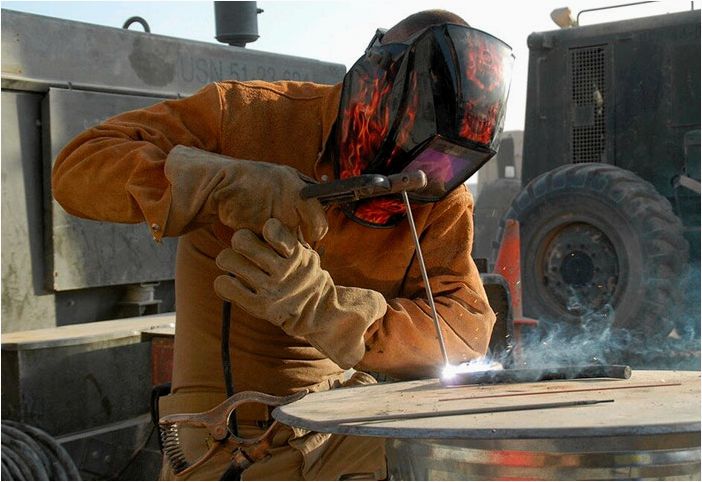
Over the past few decades, there have been major changes in the development of welding technology. The most popular equipment has become the inverter – a technical and modern device that has many advantages compared to classical welding. Along with more modern technical solutions of transformers and rectifiers, the cost is not favorable. The technical solutions are based on microcircuits. It is these small elements that have given manufacturers the opportunity to provide their equipment with a wide range of functions and radically reduce the weight and size of installations. However, there is another side to the coin. It lies in the fact that technically complex devices are more likely to fail. Hence the main malfunctions and repair of welding inverters with your own hands.
Contents of the article:
Basic malfunctions of the welding inverter
Welding inverter sparks, but does not weld
Such malfunctions are very common in budget models. The equipment produces emissions, but the electric arc does not flare up. More precisely, it flares up for a very short period of time and then quickly goes out. There are several explanations for such malfunctions. Troubleshooting should begin by checking the welding cable. As practice shows, in most cases this is the reason. If no obvious fault is found, do not become complacent. It is recommended to take a new conductor and try to strike the arc again. If nothing has been changed, check that all connectors are secure.
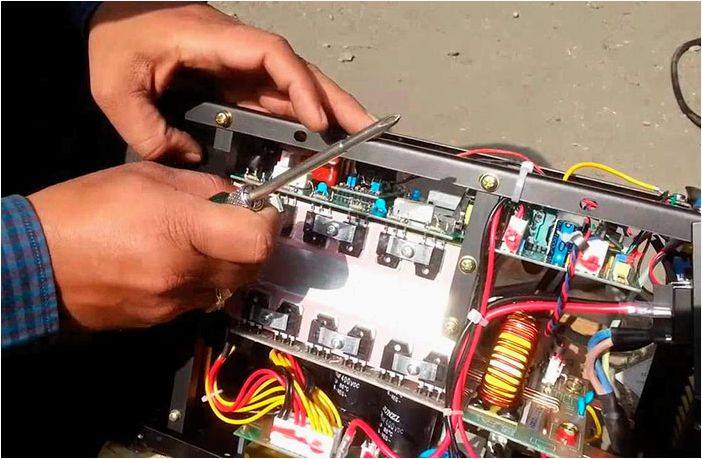
The reason may also be electrolytic capacitors involved in the converter circuit. Replacing them yourself is very easy. If you do not have the appropriate skills, you can seek the help of more experienced friends or experts. If the situation has not improved, it’s time to pay attention to the wires of the bag. They may be burnt out and need to be replaced. In this case, if the welder was unable to eliminate the malfunction, it should be taken to a service center. There are many reasons for such problems, but it is very difficult to find them by hacking. After diagnostics, specialists can quickly identify the problem and offer options for eliminating it.
The welding machine turns on, but does not weld
Even if the inverter is connected to the grid, it may not produce a welding arc. All indicators and instruments show that it is working properly, but at the moment the device itself does not cook. The most likely cause is the machine overheating. This is explained below. Another reason could be cable damage. It is worth trying to connect a new line and remove the welding arc again.

Overheating
If the inverter overheats, it may result in insufficient cooking or no arc at all. This occurs if cooking has not been interrupted for more than 10 minutes. Most models on the market are equipped with overheat protection. However, sometimes this doesn’t work. The inverter remains on but does not operate. Solving the problem is not difficult – just turn off the device for 30 minutes. During this time, the device cools down and returns to its normal state, and operation can continue.
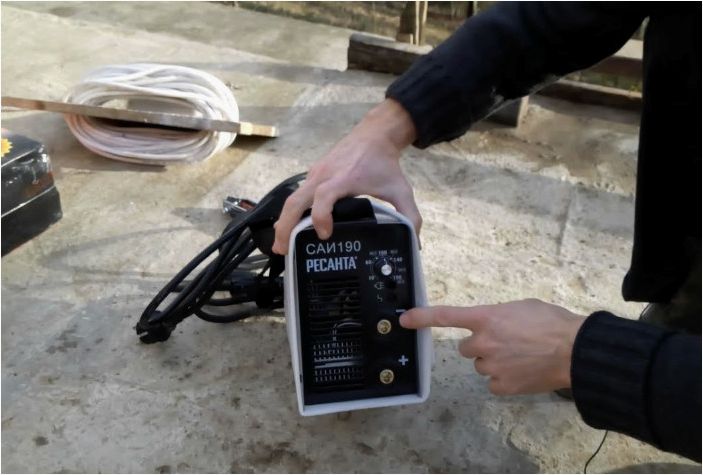
Welding inverter does not turn on/does not work
This problem occurs infrequently. The device is connected to the mains, but shows no signs of life. There are several possible reasons for this. In most cases, the electrical network is to blame. The voltage is below the minimum permissible level and is not enough to initialize the welding machine. Purchasing a voltage stabilizer can solve this problem. In the future, welding will be connected through it and function correctly.
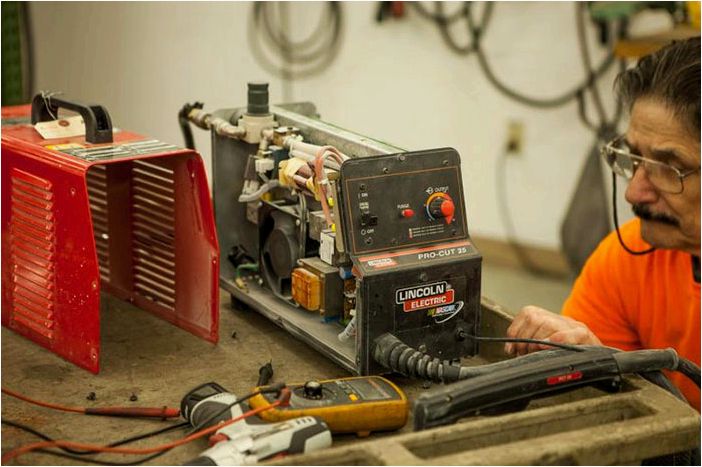
Another reason is the poor condition of the power cord that supplies power directly from the outlet to the machine itself. It is necessary to check the integrity of the cable and plug. To ensure the integrity of this section, it is a good idea to remove the housing that hides part of the power cable. If the stabilizers are useless and the power cables are normal, the cause may be a faulty inverter power supply. In case of such a malfunction, it is recommended to contact a service center. Most users cannot repair the device themselves, as this requires special knowledge and skills. To improve quality and speed up work, VTM always has its own workbench at its disposal.
Current is not adjustable
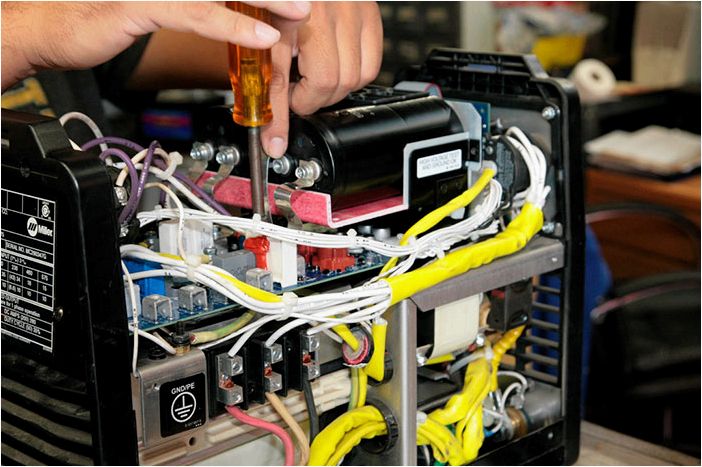
Switching the current regulator has no effect. This indicates that the regulator itself is most likely broken. Sometimes you just need to check the reliability of the contacts. It is necessary to remove the housing and carefully check everything visually. To diagnose the regulator, you need to check the welding machine using a multimeter. If the regulator is faulty, it must be completely replaced. If there is no reason, the secondary transformer and inductor should be checked. If any element is found to be faulty, it should be replaced.
Electrode sticks to metal
Most modern inverters are equipped with an “anti-stick” feature that prevents consumables from “sticking” to the work surface. However, this function does not always work correctly and may even not work at all due to a malfunction of the welding machine. The main reason for electrode sticking to metal is choosing the wrong setting, i. e. incorrect welding mode. The next reason may be low voltage in the power supply network. Inverters are sold in retail chains and work great at low voltage. However, even such inverters may not function properly due to low voltage. Buying a voltage stabilizer can help solve the underlying problem. Another reason could be the use of network extenders.
The cable may not be long enough to complete the job in a particular location. The way out of such situations is to use special welding extensions. Please note that the length of the additional cable must exceed 40 meters, and the cross-section of the wires must not exceed 2. 5 mm2. The probability of electrode sticking is almost 100%. This is caused by the reduction in welding voltage due to the use of longer cables with smaller conductor diameters. Electrodes may stick due to insufficient surface preparation for the task. It is enough to clean the metal with a grinding machine, sandpaper or other abrasive.
Diagnosis of breakdowns of inverter welding machines
Smoke or a slight burning smell coming from the inverter housing indicates a serious problem. In this case, it is not recommended to diagnose the equipment yourself. In order not to aggravate the situation, it is recommended to contact a service center. Troubleshooting requires extensive experience in repairing welding machines and an understanding of all the nuances of this model. If the problem is not very serious, you can diagnose the problem yourself. The first step should be to remove the case and visually inspect all components of the device. Models with poor soldering quality or insufficient wiring insulation may enter the market.
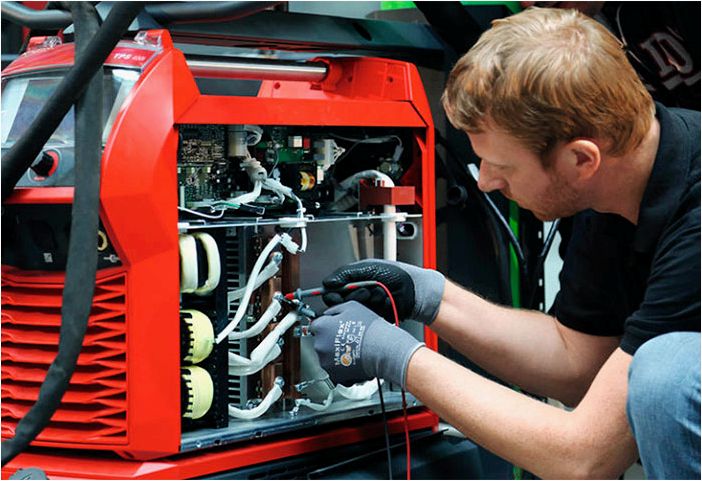
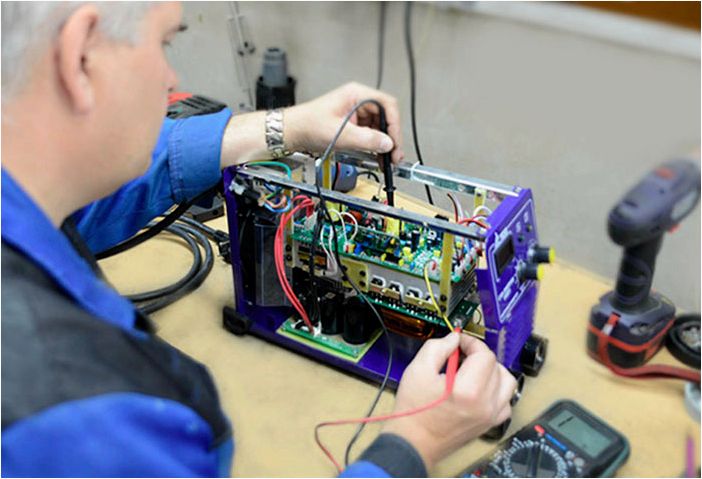
To repair the device, it is enough to re-solder some elements and restore the functionality of the device. It is not difficult to understand which part is faulty. It is distinguished by the presence of dark areas and obvious signs of cracks or short circuits. The failed element must be replaced. Each component is marked so that you can accurately match similar parts to be replaced. After a visual inspection that did not help identify the problem, you can begin a more thorough analysis. A multimeter is required. This ensures that all components on the board are checked. Always diagnose transistors and printed circuit conductors. Burnt parts and open circuits must be repaired. At the same time, all contacts on the board are checked. If necessary, they can be cleaned with a regular office eraser.
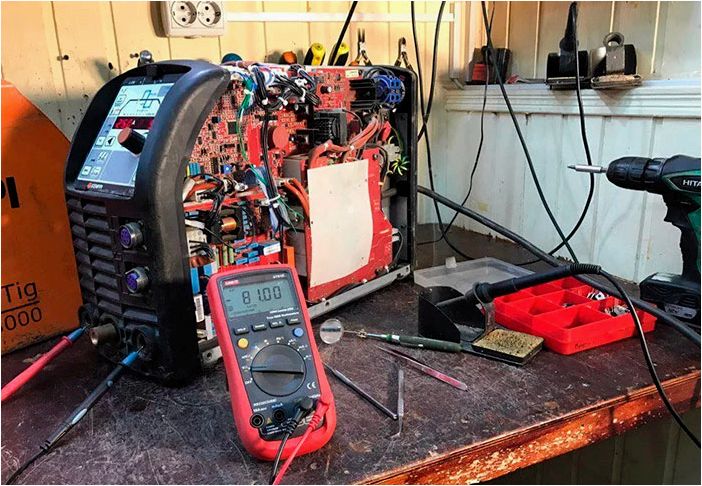
The diode bridge of the inverter performs the function of a rectifier. They are located in the radiator. Diode bridges are characterized by high reliability, but they can also fail. To determine the condition of this node, it is necessary to remove the solder from the overall circuit. Checking with a multimeter will show whether the diode bridge is working properly. If you have completed all of the above operations and still cannot find the problem, you should contact a specialist. It is not recommended to repair the welding machine yourself.
Conclusion
This article lists the most common faults and describes the process for fixing them yourself. However, only in the simplest cases. Without repair skills, serious operations are meaningless. It is recommended to take the device to a service center. It is important to take precautions when troubleshooting. And more than that. If a welder costs between $50 and $70, it’s not always worth repairing it. In some cases, it is easier and cheaper to buy an identical new one.