Tube Feeding
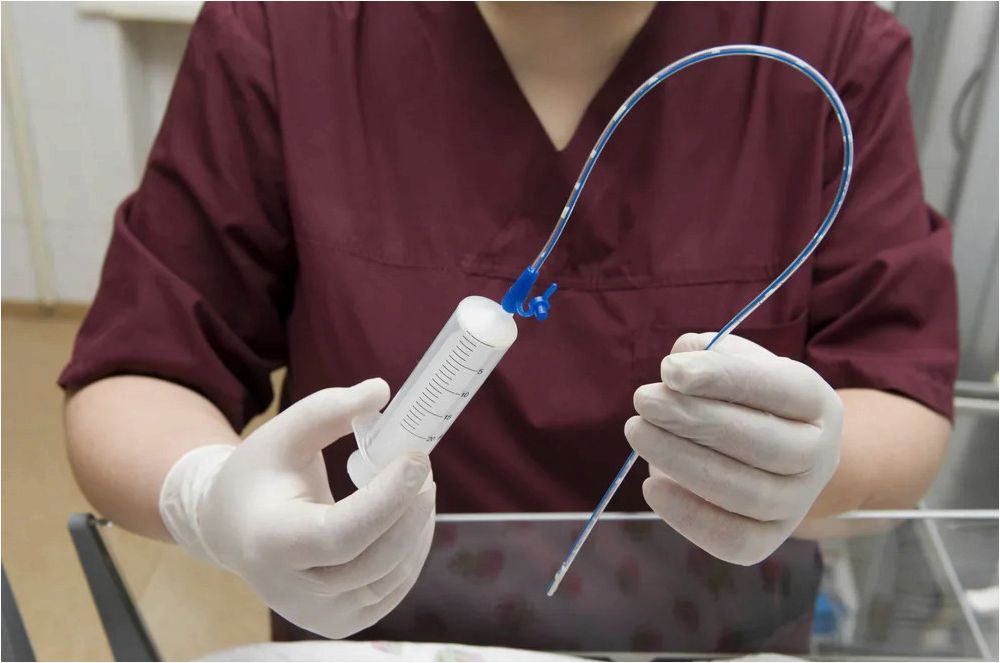
Some serious illnesses and injuries can significantly impair the body’s reflexes. Since eating independently without swallowing is not possible, patients should be fed through a special device called a nasogastric tube. This method can be used both at home and in hospitals.
Article Contents:
What Is a Tube?
A nasogastric tube is also called a feeding tube. It is inserted directly into the patient’s stomach through the nasal passage and esophagus. Essentially, it is a hollow tube with rounded edges to prevent tissue damage during insertion. The tube is made of a lightweight, flexible, and completely hypoallergenic material. There is a special funnel on the outside. Food is administered through it using a Janet syringe. The opening is usually covered with a special cap to prevent foreign objects from entering the tube. The nursing staff is familiar with the details of tube feeding.
Main Indications for Use
If a patient is unable to eat on their own, they must be fed via a feeding tube. This is due to reduced bowel function, impaired consciousness, or severe damage to the throat or mouth. A feeding tube is most commonly inserted in the following cases:
- Tube feeding is prescribed if the area of the brain controlling the swallowing reflex is affected, function may be partially or completely suspended. After recovery, the patient can return to a normal diet. In cases of severe trauma and with age, tube feeding becomes permanent; if there are physical injuries—head trauma, severe swelling of the tongue or larynx;
- If the patient is asleep or unconscious;
- In cases of psychological disorders—when the patient refuses to eat;
- Neurological diseases with associated disorders (multiple sclerosis, Parkinson’s disease, Alzheimer’s disease);
- Gastrointestinal surgery.
- Enteral feeding is prescribed in cases where the patient is at risk of death, or when ingested food may infect damaged tissues or organs, and when normal swallowing is impossible or difficult.
Contraindications for tube use
Contraindications for Tube Use
If the patient has a severe traumatic brain injury;
- If there is a worsening of a stomach ulcer;
- If there are varicose veins in the esophagus;
- If there are blood clotting disorders;
- If the esophageal lumen is severely narrowed and the tube cannot be inserted.
- The insertion procedure
Insertion Procedure
Dietary Guidelines

Dietary Considerations
Portion sizes should be increased gradually. The first 2–3 portions should not exceed 100 ml. Later, this can be increased to 300 ml. The following foods are more suitable for enteral feeding.
Kefir;
- Fish, meat, and vegetable broths;
- Plain mashed potatoes;
- Porridges, especially semolina;
- Specialized formulas.
- Ready-to-use dry formulas can be used as a dietary base or dietary supplement. They are rich in protein, which is often lacking in patients undergoing intensive treatment.
The number of meals should not exceed 5, but should not be fewer than 3. Sterile syringes must be used for each meal. The facility’s 24 nursing staff members carefully monitor all feeding protocols and strictly maintain hygiene throughout the entire process.
Feeding Process
The Feeding Process
The patient is in a semi-reclining position;
- The outer part of the catheter is lowered under the patient’s neck and secured with a special clamp;
- A funnel is attached to the syringe, raised 0.5 m above the stomach, and the clamp is released;
- Food is administered slowly, with or without slight pressure, and should be administered in a volume of 150 ml over 5–6 minutes;
- After feeding is complete, the tube should be flushed with 30–50 ml of water;
- Then the tube is clamped again, lowered, and the opening is closed with a stopper.
- A feeding tube is a modern and effective method of feeding critically ill patients. It offers many advantages. Unlike intravenous feeding, this method prevents atrophy of the stomach lining, and the gastrointestinal system remains functional. The intestinal system can be used for a longer period of time. The catheter is placed for three weeks. The placement procedure must be performed by a doctor, who should also provide recommendations regarding feeding frequency and diet.
Tube feeding