Houses made of logs or timber: which is better?
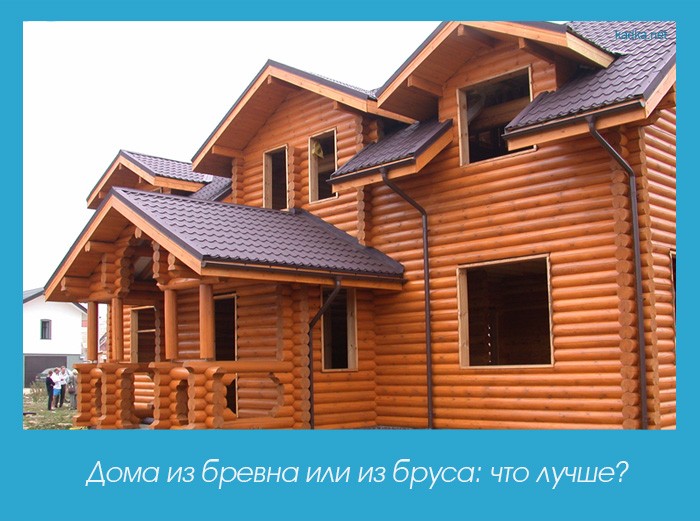
During the construction of their own wooden house, any customer is faced with the issue of choosing a material. Construction companies offer a huge number of different options: houses made of non-profiled, profiled and laminated timber, hand-cut logs and rounded logs, as well as frame houses. How to choose the best solution in such a variety?
Contents
- Construction of houses from timber
- Non-profiled timber
- Profiled timber
- What are hand-cut log houses?
- Which technology to choose?
Now we are ready to provide you with a more detailed look construction of houses from timber and compare them with hand-made log houses.
Construction of houses from timber
Houses made of timber are simply extremely popular, primarily due to their low cost. Coniferous species are most often used for timber harvesting: cedar, spruce, pine or larch. The timber takes on its shape when sawing: timber of the required size, with a square or rectangular cross-section, is cut from ordinary round timber at a sawmill. Next comes sorting, when lumber with flaws is rejected. As a result, a normal beam will remain; later it is calibrated by cross-section and length.
The beam should dry after calibration. Timber with natural moisture does this in natural conditions; it is stacked on the site and covered. In this position, the logs are protected from rain, but can still be ventilated. Drying the timber can take up to several months.
There is another option & mdash; forced drying. It takes place in a special drying chamber, where the timber is placed for 2-4 weeks. After this, the material is sanded on a sawmill, and then packaged for subsequent transportation.

Today, houses made of timber are built using three main technologies: profiled timber, non-profiled timber and laminated veneer lumber.
Non-profiled timber
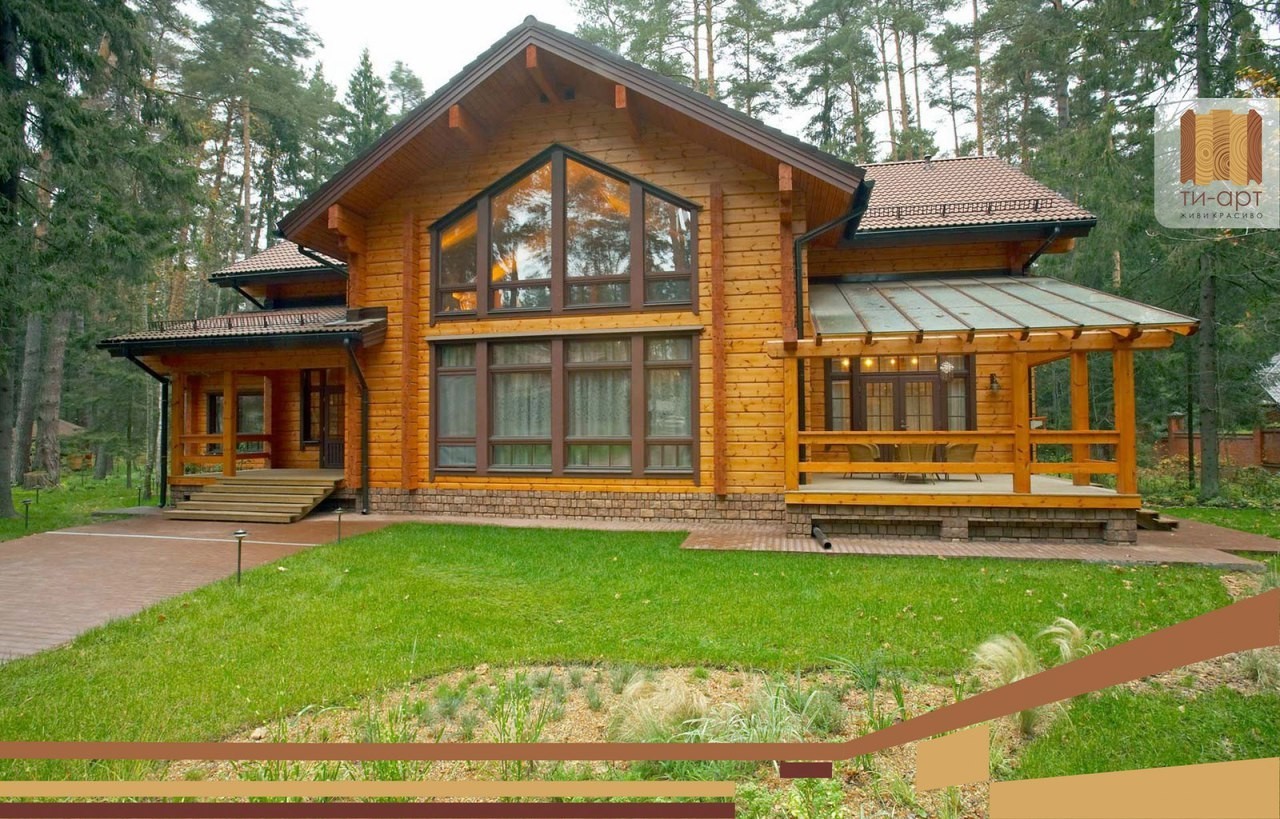
For houses made of non-profiled timber (natural humidity), timber with a humidity of more than 20% is used. The technology is suitable for those who do not have a large construction budget, and the duration of the process is not critical for the customer. Natural moisture timber differs from other technologies in the absence of long-term forced drying and sharpening. It does not go through a drying chamber, but is dried in the open air. It is thanks to this that its cost is low.
Pricing is also influenced by the size of the cross-section of the timber, the amount of lumber (depending on the size and number of floors of the log house), the type of wood (usually pine or spruce) and the cutting season. Winter wood is considered to be of the highest quality, which is why it costs more.
Of all the types of timber, this is the one most often chosen due to its low cost. But in pursuit of profit, it is important to know the main disadvantages of non-profiled timber:
- Large shrinkage. In houses made of timber with natural humidity, water occupies a little more than 1/5 of the entire log house. This means that in the first year such a house will undergo significant shrinkage. During this process, the timber often cracks and loses its attractiveness, therefore, finishing work is required.
- Not very resistant to environmental influences.
- The appearance can be spoiled not only by traces of bark beetles, but also by inter-crown insulation and noticeable seams.
- Due to the absence of grooves and tenons, a house made of non-profiled timber is more ventilated. The owner, most often, has to additionally insulate the facade after some time.
Consequently, the cost of construction increases due to log care products, heating, insulation and other factors.
Profiled timber
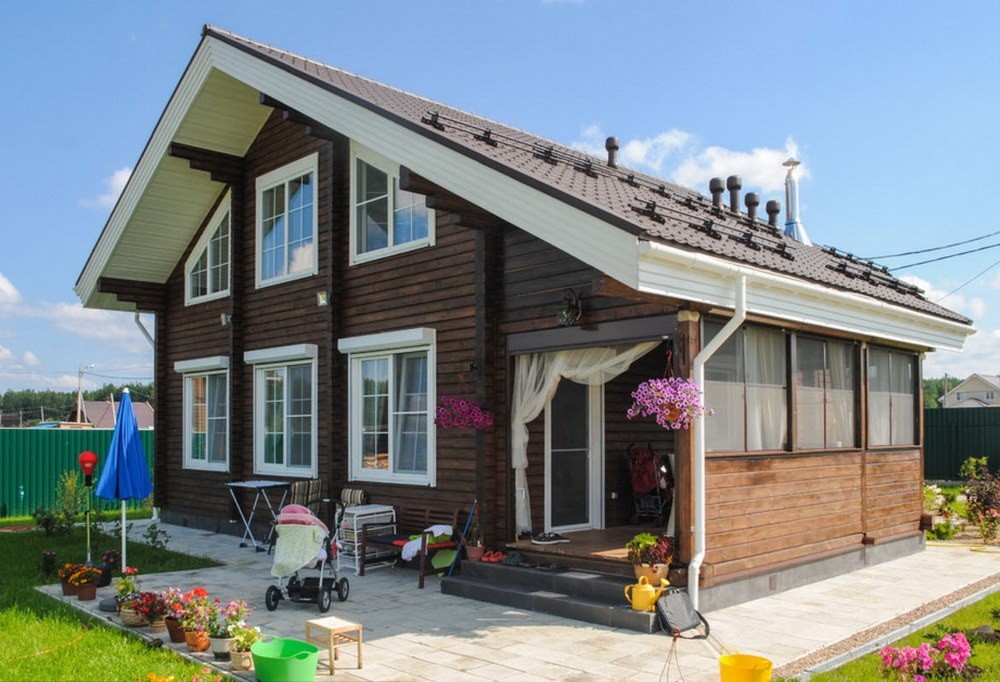
Profiled timber, just like non-profiled timber, is in most cases made from coniferous wood: spruce, pine. Less often & mdash; from cedar or larch. Glue and other chemicals do not take part in the action. In essence, this is the same beam with a rectangular cross-section, but now a tongue and groove is added to it on the top and bottom surfaces. It can be dry and of natural moisture, but the former is used extremely rarely, since it “leads” when shrinking. Among the advantages of profiled timber are:
- Low price of building materials.
- Windproof. It is ensured by a tight tongue-and-groove connection.
- Compared to conventional timber, profiled timber provides fewer gaps between the crowns during shrinkage. However, on the beam itself, cracks will sometimes appear as thick as a finger or palm. There is no escape from this, because the top, densest layer has been removed from the log & mdash; sapwood.
Of the negative qualities:
- Cracks appear on the timber one way or another, the house requires external and internal finishing, additional insulation.
- It is possible for the beam to twist, because The top dense layer of the log has been removed.
- Dry timber and timber with natural moisture differ greatly in cost.
Houses are also built from laminated veneer lumber, and we’ve covered its advantages and disadvantages in detail in a separate article.
What are hand-cut log houses?
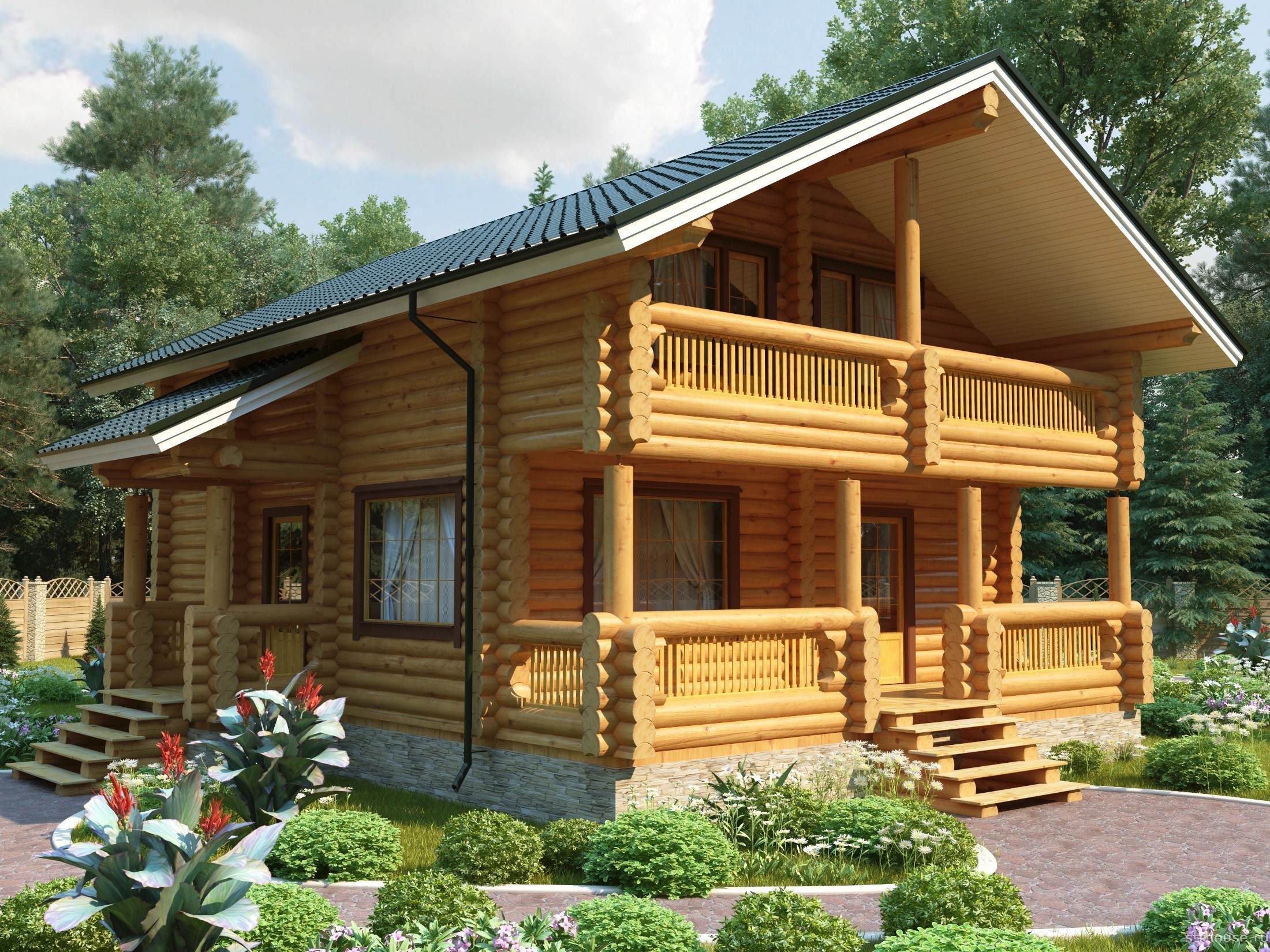
Hand-cutting technology has been passed down from generation to generation for centuries and is widely used today for building natural log houses.
First, we select the best logs from the felling area that are suitable for building a house according to a specific design. We primarily look at the length, diameter, and overall condition of the logs (absence of bark beetle marks, blue stain, fungus, and cracks). The bark is carefully removed from suitable logs. To avoid damaging the sapwood, we remove the top layer of bark by hand with a scraper. Preserving the sapwood is very important, as it is the tree’s natural protection against the aforementioned negative factors. If the log is not free of sapwood, even shrinkage will occur more evenly and without cracking. The value of this layer of bark cannot be overstated. Next, the logs are marked according to the design measurements, and the first crown is constructed—the strongest one. It will bear the main load. Each subsequent crown is marked with a longitudinal groove, lock, and cup. The cup is selected with an axe so that the top log fits tightly and is wedged into the lock. This ensures wind-proof corners and ensures the strength of the entire structure.
After the last crown is laid, the logs are numbered and shipped to the customer’s site. There, according to the markings, the log house is reassembled on the finished foundation. Jute insulation is placed in the grooves and cups. After the “house frame” is assembled, installation of the rafter system and roof begins. The house remains standing in this form for about a year—during this time, shrinkage occurs. If you ignore this step and install windows, doors, and begin finishing, all your efforts will be in vain. After all, during the first year, a log house shrinks by approximately 8-12 cm. We strongly recommend finishing work only after this shrinkage.
Log houses themselves look more impressive than timber houses, but this is a matter of taste, and taste can vary. Therefore, it would be much more appropriate to list the objective advantages of hand-cut timber:
Logs have low thermal conductivity: the house will be cool in hot weather and warm in winter. The wood “breathes” and creates a comfortable microclimate inside the house.
- Logs do not warp due to the preservation of the sapwood.
- You can choose the desired log diameter, up to 40-44 cm or even more. A large diameter makes the house warmer, more interesting in terms of appearance and architectural possibilities.
- Wood debarked by hand with a scraper hardly cracks (no more than 1-2 mm), retains its cone shape and natural texture.
- A log house does not require additional finishing.
- There are many available cutting methods: in the paw, in the bowl, Norwegian cutting, frame-log technology.
- The average life expectancy of such a log house is 100 years.
- But even such high-quality technology has its drawbacks. We include:
Higher cost compared to laminated and profiled timber.
- Increased requirements for the qualifications of the construction team and the experience of the developer.
- Longer construction times & mdash; Most of the work is done manually and with great care. The cutting period for an average log house is 100 sq. meters takes about 2 months.
- Which technology to choose?
Which technology to choose?
If you trust the experts, they will unanimously make a choice in favor of manual cutting. We have already compared it with rounded logs and laminated veneer lumber, and in both cases, the advantages of cutting were undeniable. By choosing this method, you are guaranteed to get an environmentally friendly, warm and most importantly, reliable home!
houses, timber, logs, better