Devices and principles of operation of electric convectors
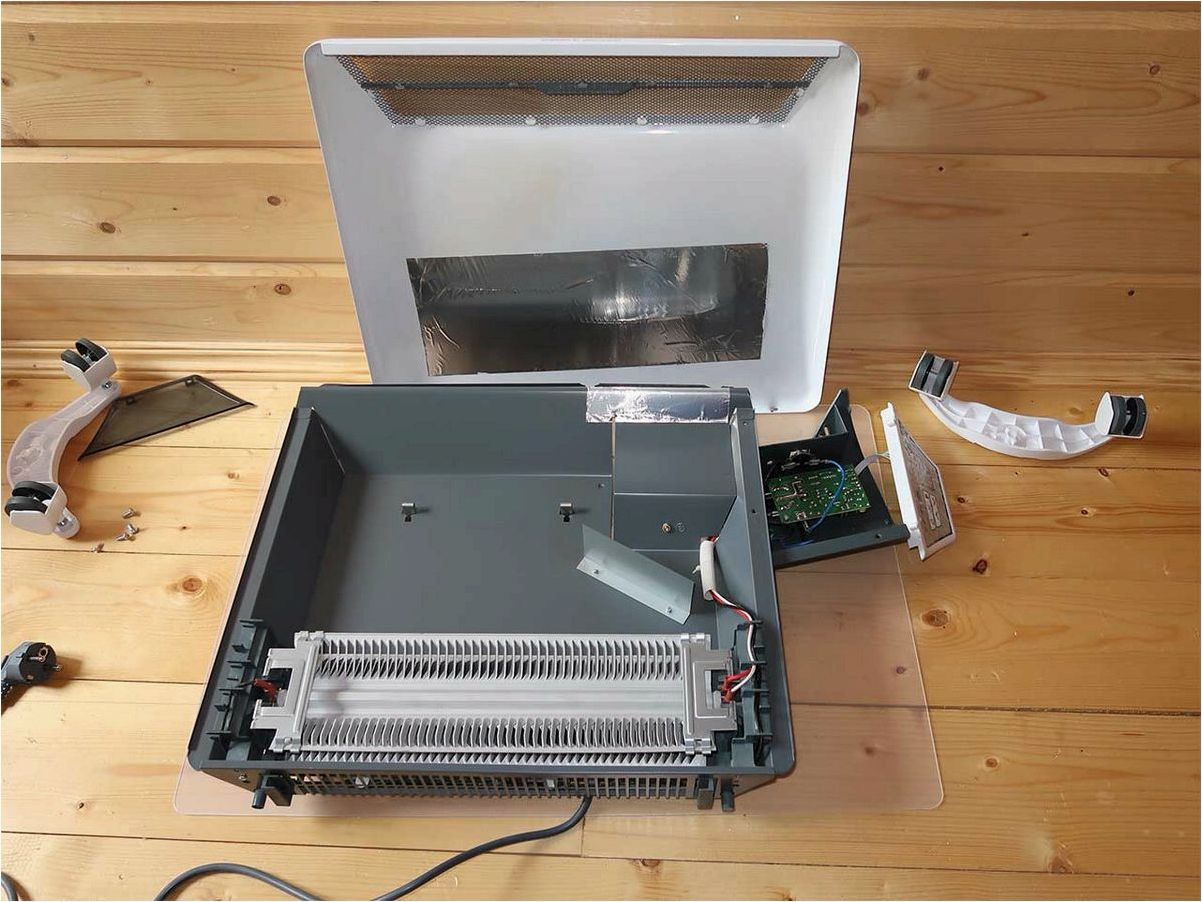
Electric convectors are one of the most popular heaters used for heating domestic, industrial and office premises. Despite the very wide popularity of this type of heater, few people know how it works and what the purpose of certain convector controls is Convector repair life may be different, you can do something yourself, but in some cases you need to turn to specialists.
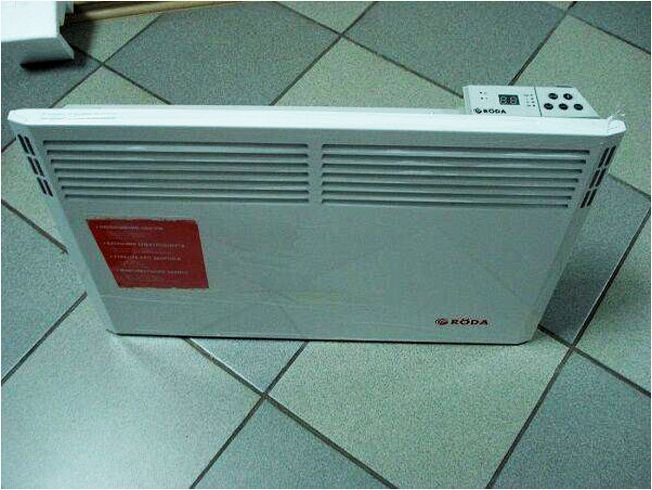
Let’s look at the operating principle of a convection heater. The operating principle of electric convectors is based on natural air circulation (convection). In this case, the convector has a rectangular shape, and electric heating elements are located inside it.
The surface of the convector has holes designed for air circulation. The convector is positioned in such a way that the air entering through the bottom and side openings is heated after passing through the heating element and exits through the openings in the front panel of the convector.
For example, oil heaters heat a room using thermal radiation emanating from heated radiators. In convectors, room heating is carried out due to another principle – a directed flow of heated air. Thanks to this, the convector heats the room much faster and, less importantly, evenly over the entire area.
The heating elements of modern conveyors are low temperature and made of special alloys that heat up much faster than conventional tubular heating elements. As a rule, 30-60 seconds after being turned on, the conveyor begins to send heat into the room.
The efficiency of this type of heater reaches 90% due to the fact that almost all the energy heats the room, so other types of heaters, such as oil heaters, immediately begin to release heat into the room. The oil and its metal body (radiator) are heated in a heat-conducting medium.

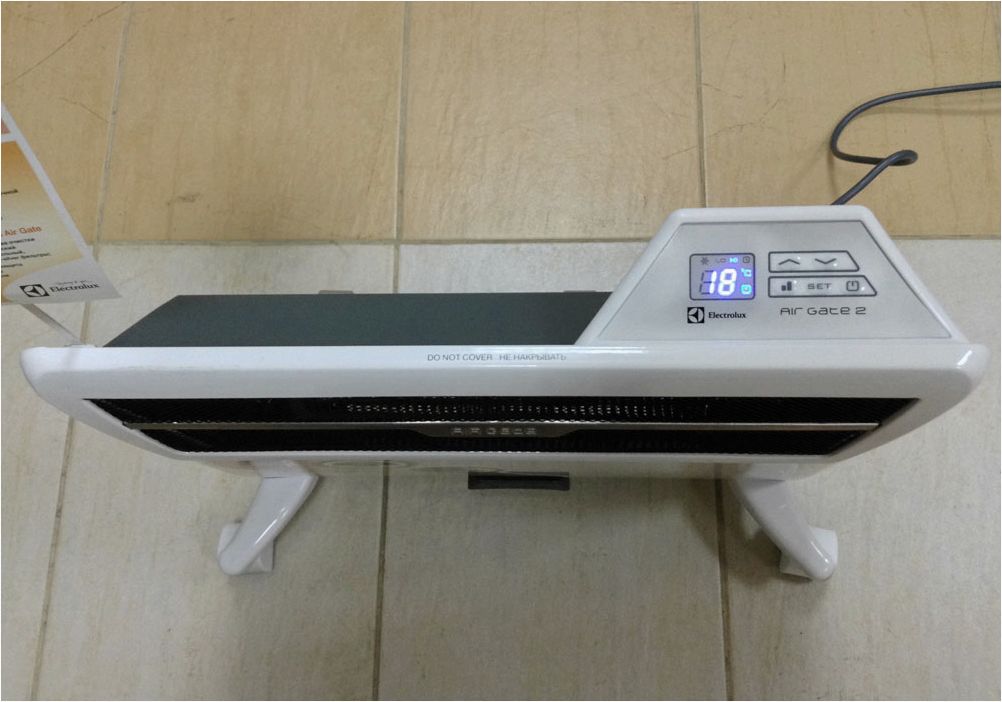
Some people claim that heaters, including electric convection heaters, burn oxygen. But is this really so? As mentioned above, low-temperature heating elements are installed in electric convectors. As a rule, the maximum temperature of such heating does not exceed 600 60 o S
At this temperature, oxygen is not burned. This is the main advantage of a conveyor heater compared to other types of electric heaters, whose heating elements reach several hundred degrees. Furthermore, the low operating temperature of a convector means it can be installed virtually anywhere, including on wooden walls, for example, near surfaces that pose a fire hazard.
And how can you effectively heat a room if the heating element has a much lower operating temperature than other types of heaters?
Conveyor heating elements are much larger than heating elements with a higher operating temperature. This allows the conveyor to generate sufficient heat to heat critical areas, despite the lower operating temperature of the heating elements. Depending on its capacity, a single conveyor heater can heat a room of up to 30 square meters. Heating elements are designed for a wide range of applications.
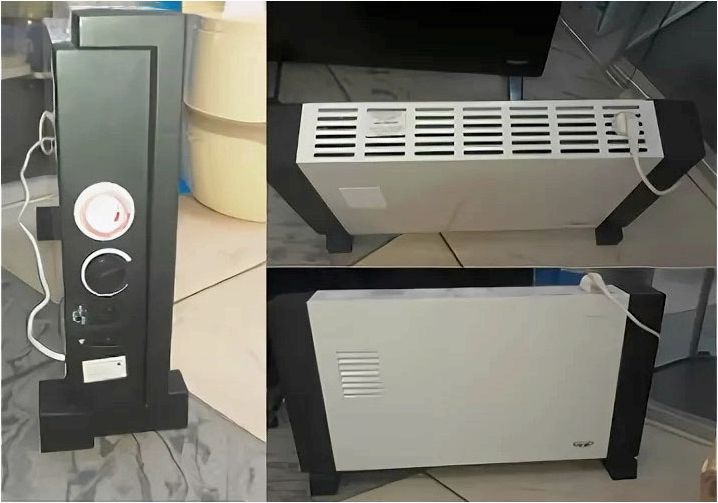
Most convector heaters are equipped with a thermostat to regulate the temperature of the heating elements. Inexpensive models have a mechanical thermostat that provides a coarse temperature control. Expensive models are equipped with an electronic thermostat that can regulate the temperature with high precision. For home use, precise temperature control is less important. If the room is cold and you need to warm it up quickly, the thermostat is set to the highest temperature. Once the optimal, comfortable temperature is reached, the thermostat can be set to a lower temperature.
Precise temperature control is important when maintaining a room temperature that requires strict adherence to a temperature control regime. Electronic thermostats allow for automatic temperature control in the room.
In addition to the thermostat, electric convectors have switches that supply voltage to the heating elements. Convectors with a power of 1500-2500 W have two or three heating elements and therefore have switches with multiple positions. For example, when set to position 1, one heating element is on, position 2, two, and position 3, the conveyor operates at full power. This means all three heating elements are on.
On some types of electric conveyors, each heating element is equipped with a separate switch. This option for switching on the heating element is the most acceptable, as it allows another, in-service heating element to be turned on if one element burns out. Using step switches, it’s more likely that the convector will not operate in any switch position.
Thermostats and switches for heating elements allow you to regulate the air heating temperature over a fairly wide range.
Electric convectors can be mounted directly on the wall or on the floor. If such a heater is installed on the floor, there is a risk of it tipping over and starting a fire. Therefore, almost all convectors are equipped with a special safety device that automatically shuts off power to the heating elements if the convector accidentally or spontaneously falls.
This safety device operates as follows: If the conveyor is in an upright position, the contacts close, and power is supplied to the conveyor’s heating elements. If the conveyor falls, i. e., When the convector deviates from the vertical position by a preset angle, the protective device contacts open and the conveyor heating elements are switched off.
Please note that the convector will operate normally only if there is unimpeded air circulation. Therefore, do not cover the convector to avoid damage.
Devices and operating principles of electric convectors